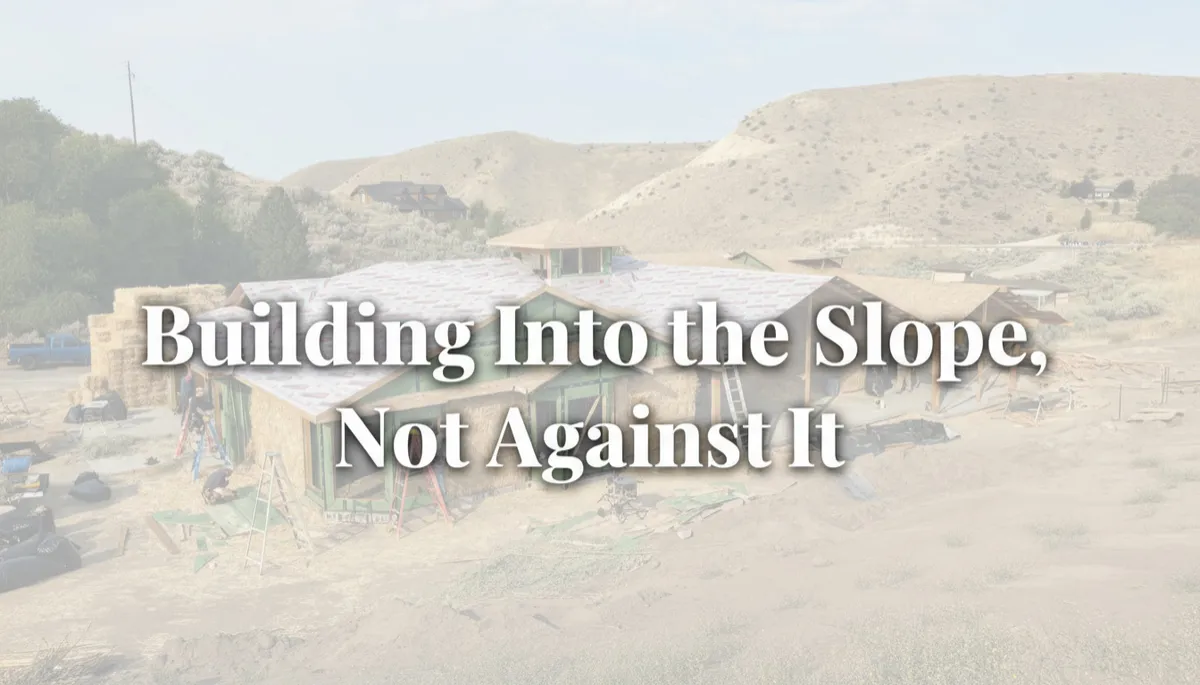
Building Into the Slope, Not Against It
Building Into the Slope, Not Against It
Can You Build a Straw Bale Home on a Sloped or Difficult Site?
Some of the most beautiful home sites in the Boise Foothills are also the most challenging to build on. Slopes, uneven ground, tricky access, the very features that give a piece of land its views and its character are often the features that make people nervous about building there. The good news is that a difficult site is not a problem to overcome so much as an opportunity to design for. In the right hands, the slope becomes one of the best things about the home.
The difference between a hillside lot being a headache and being a gift comes down almost entirely to design. Here is how a challenging site becomes a strength.
The slope is a feature, not a flaw
Start with a shift in mindset. A flat lot is easy, but it is also generic. A sloped lot offers something a flat one cannot, the chance for a home that engages with the land in three dimensions. Views open up. Levels can step with the grade. The home can be tucked into the hillside in ways that make it feel like it grew there rather than being set on top.
The best foothills homes do not fight their slopes. They work with them. A well-designed home on a hillside uses the grade to create walk-out levels, framed views, and a sense of the house belonging to its site. The slope that looked like an obstacle becomes the source of everything interesting about the design. That reframe is the starting point, and it changes the whole project.
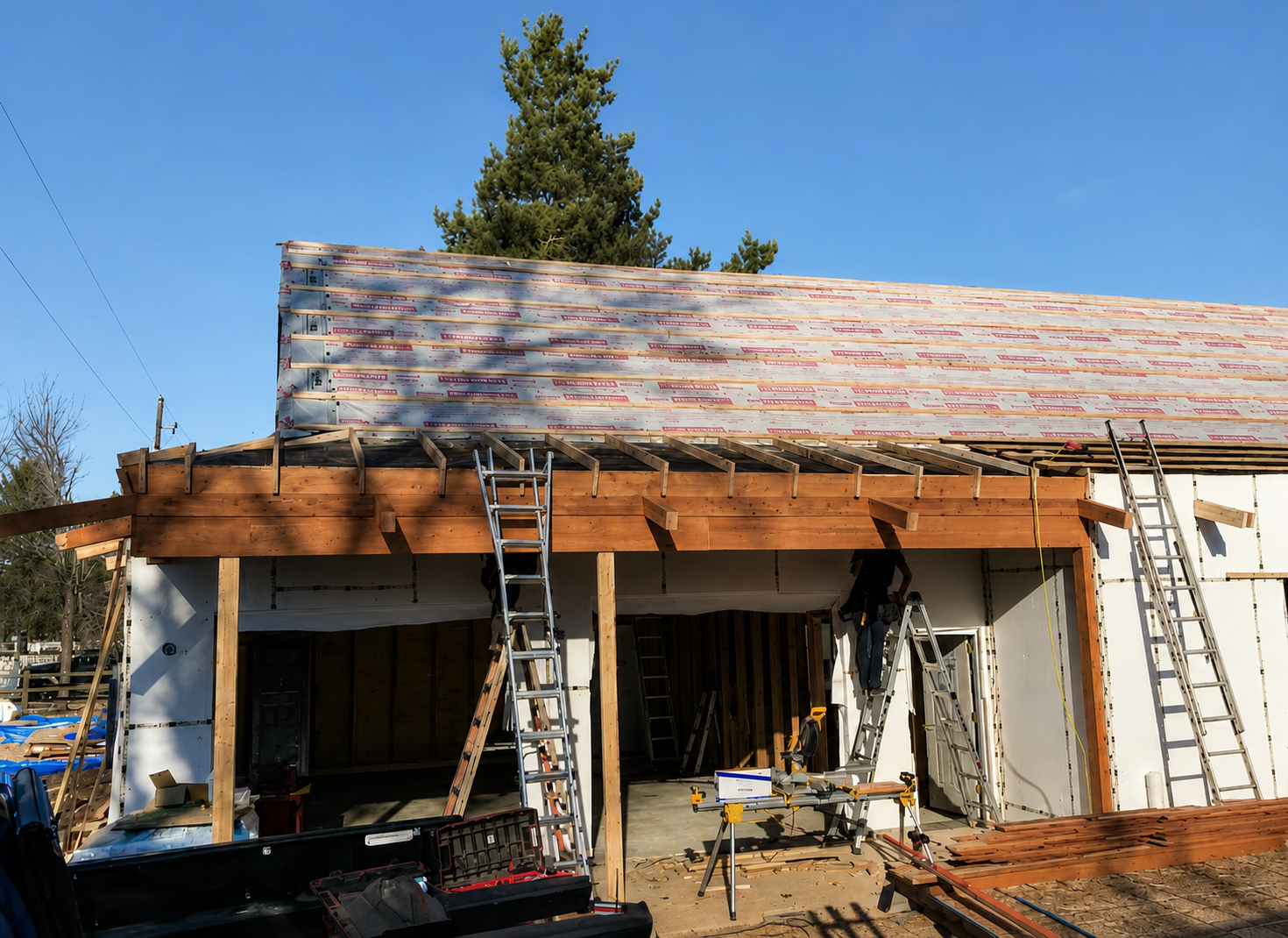
Reading the site before drawing the home
Turning a slope into a strength starts long before any design, with a careful reading of the land. Where does the grade fall and how steeply? Where is the stable ground and where is the tricky ground? How does the sun move across the site, and how does the slope relate to it? Where does water want to travel down the hill? Where is the natural place for the home to sit?
On a sloped site these questions carry more weight than on flat ground, because the land is giving stronger direction about what will work. Reading it well is what allows a home to be placed where it belongs, oriented to the sun and the views, settled onto stable ground, and designed to let water pass safely around it. This is craft, and it is the foundation everything else builds on. Skip it, and a slope really can become the headache people fear. Do it well, and the land practically tells you where the home wants to be.
Foundations that meet the grade
On a sloped site, the foundation does more work, and it is where good engineering earns its keep. Rather than trying to force a hillside into a flat pad, a well-designed home uses foundation strategies that meet the grade, stepped foundations, walk-out levels, and structures engineered specifically for the slope and the soil.
Done right, this is not a compromise. It is what lets the home sit naturally on the land while standing solid and secure for the long run. A home engineered properly for its slope is every bit as sound as one on flat ground. The key word is properly. This is exactly the kind of work that rewards experience and careful engineering, and it is where the value of a builder who understands difficult sites becomes obvious. The foundation is invisible in the finished home, but on a hillside it is doing essential work every day.
Where design-build really pays off
A challenging site is where designing and building as one connected process matters most. On a difficult lot, the design and the construction reality are deeply intertwined. How the home is drawn depends on what can be built on that grade, and what can be built depends on how the home is drawn. Separating those two into different hands is where hillside projects go wrong, with a beautiful design that turns out to be impractical or ruinously expensive to actually build on the slope.
When one team reads the site, designs the home, and builds it, the slope is accounted for at every step. The design responds to what the land allows. The engineering is planned from the start, not discovered late. The home that gets drawn is the home that can actually be built, beautifully, on that specific piece of ground. That integration is what turns a hard site from a risk into a confident, well-managed project.
The home that could only stand there
There is a real reward at the end of all this. A home designed for its slope is a home that could exist nowhere else. It belongs to its exact piece of land in a way a flat-lot home never quite does. It steps with the grade, catches the views the hillside offers, and settles into the site as though it had always been meant to be there.
So if you have fallen for a foothills lot and hesitated because of the slope, take heart. That slope is not a reason to walk away. Approached with the right design and the right engineering, it is the reason your home will be extraordinary. The most challenging sites, handled well, produce the most remarkable homes, and the land that scared other people off becomes the very thing that makes yours one of a kind.
