How to Choose Land for a Custom Home in Idaho’s Boise Valley
How to Choose Land for a Custom Home in Idaho’s Boise Valley
Most people choosing land for a custom home fall in love with the view first and think about the building second. That is backwards, and it can cost you more than any other early decision. The land you choose shapes what your home can be, what it costs to build, and how it performs for the next hundred years. Choose it well and the home almost designs itself. Choose it poorly and you spend the entire project fighting the site.
Here is how we think about land before a single line gets drawn, and what we wish more people knew before they sign.
Start with orientation, because in this valley it is everything. Idaho gets more than 200 sunny days a year. A lot that lets you face the main living spaces and the largest windows to the south puts that sun to work for you. South-facing glass captures the low winter sun for free heat and, with the right overhangs, blocks the high summer sun to keep the home cool. This is the foundation of passive solar design, and it is the difference between our Squaw Butte project running zero mechanical heating through three months of Boise Valley winter and a conventional home running its furnace all season. You cannot add good orientation later. Either the land allows it or it does not, so we look at solar exposure before we look at the view.
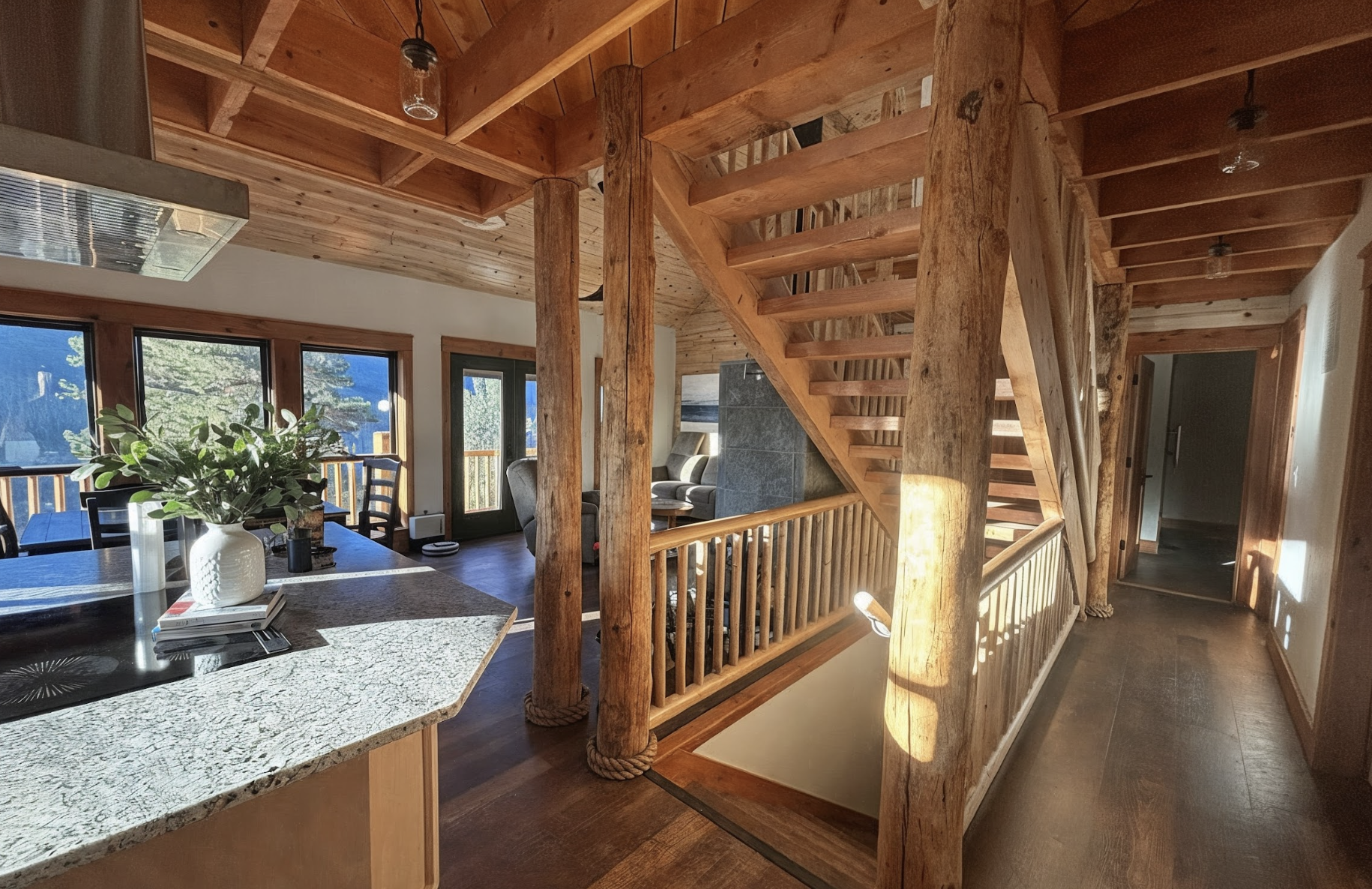
Slope is the next thing we study. A gentle slope is often a gift. It helps with drainage, opens up daylight basement and walk-out options, and can frame the home beautifully against the foothills. A steep slope is not a deal-breaker, but it adds cost and complexity in excavation, foundation, and access that you want to understand before you buy, not after. Flat land is simple to build on but can create drainage questions of its own. None of these is wrong. They are just different, and each one points the design in a different direction.
Then come the practical realities that do not show up in a beautiful listing photo. Where does the water come from, and is there an existing well or will you drill one? How will you handle septic, and will the soil pass a perc test? Where does power come from and how far does it have to run? What is the legal access to the property and is it year-round? In the foothills and on acreage outside the city, these questions are not formalities. A parcel with a hard well, poor soil, and a long utility run can quietly add a large number to a project before you have built anything at all. We would rather find that out with you on day one than have it surprise you in month three.
Setbacks, easements, and zoning matter just as much. The buildable area of a lot is almost always smaller than the lot itself once you account for required setbacks from property lines, roads, and waterways, plus any easements crossing the land. We have seen people buy acreage assuming they could place the home anywhere, only to learn the real building envelope was a fraction of what they pictured. Before you commit, you want to know exactly where a home can sit and how big it can be.
This is also where the wildfire conversation starts. If you are building in the wildland-urban interface, and much of the desirable land around the Boise Valley is, the site needs room for defensible space and an approach that takes fire seriously from the start. Good land gives you the room to do this. The right wall system, a straw bale assembly tested to resist direct flame, does the rest. Site and structure work together here.
Now, about the view. We are not telling you to ignore it. The view is often why people build out here in the first place, and a home should celebrate where it sits. The point is to bring the view into the decision alongside orientation, slope, access, and the buildable envelope, not ahead of all of them. The best sites let you have the view and the solar orientation and the practical buildability. They exist. You just have to evaluate land with all of it in mind instead of letting the view make the decision by itself.
The reason we walk land with clients before they buy, whenever we can, is simple. By the time you own the parcel, the biggest constraints are locked in. The orientation is set. The slope is set. The access and utilities are what they are. A builder who understands both design and construction can look at a piece of raw land and tell you what it wants to become, where the home should sit, and what it will take to build there. That is the heart of taking a project from raw land to a finished home you will live in for generations.
If you are looking at land in the Boise Valley and thinking about building, the best time to involve a design-build firm is before you buy, not after. The right piece of ground is the first decision that makes everything else easier.
