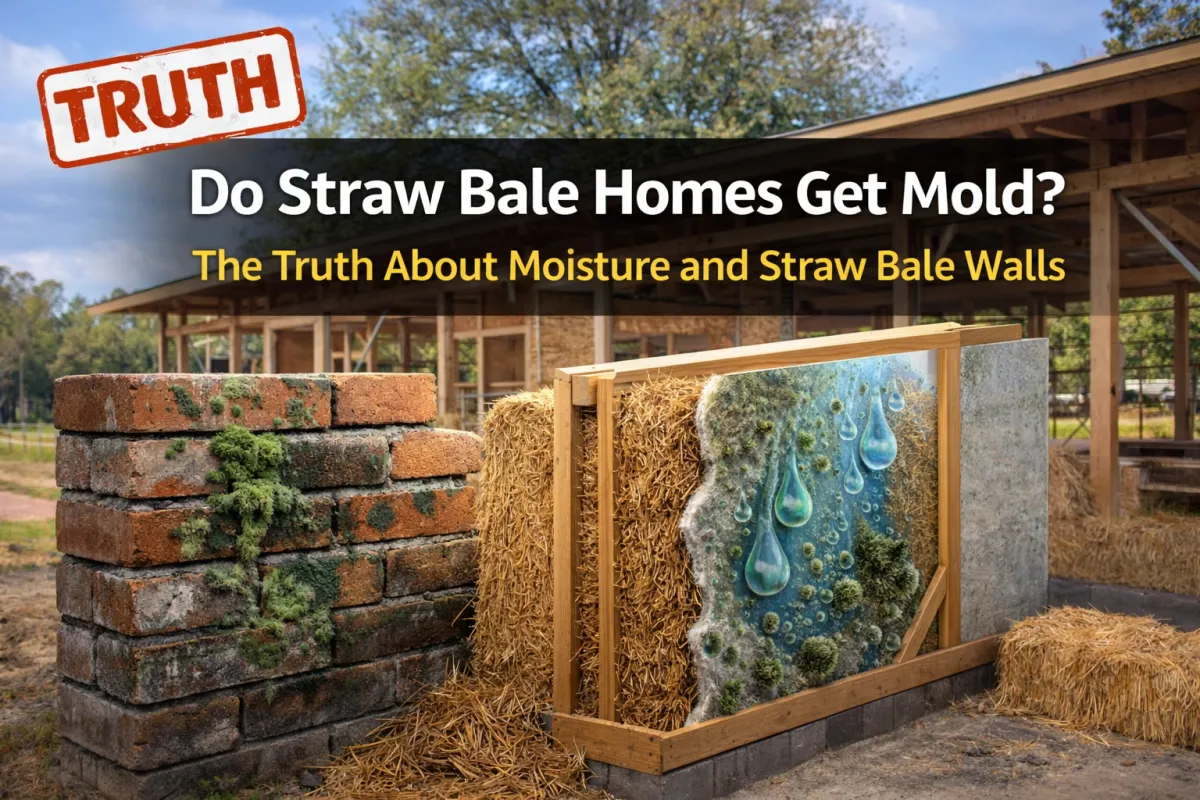
Do Straw Bale Homes Get Mold? The Truth About Moisture and Straw Bale Walls
Do Straw Bale Homes Get Mold? The Truth About Moisture and Straw Bale Walls
Moisture. Mold. Mildew. These are the words that come up in almost every conversation I have with someone who is curious about straw bale construction but not yet convinced. And I respect the concern. Mold in your walls is a serious problem in any home, and asking tough questions before you build is exactly what a smart homeowner should be doing.
So let me give you the straight answer, and then I will explain why.
Straw bale wall assemblies handle moisture and water vapor orders of magnitude better than conventional wall assemblies. Not slightly better. Not about the same. Orders of magnitude better.
I know that sounds like a bold claim. So let me walk you through the building science behind it.
The reason mold develops in walls is simple.Moisture gets trapped in a place where it cannot dry out, the temperature is right, and organic material is present for the mold to feed on. In conventional construction, this happens more often than most people realize. Vapor barriers in the wrong location, insulation that traps moisture against cold sheathing, building wraps that prevent drying. These are common problems in standard wall assemblies that lead to hidden mold behind your drywall.
A straw bale wall works differently. The thick, plaster-coated straw bale assembly is what building scientists call a "vapor-open" system. Moisture can move through the wall and dry to the exterior or interior depending on conditions. The wall breathes. It is not trapping moisture in a tight cavity the way a 2x6 wall with a polyethylene vapor barrier does.
This is critical to understand. The plaster skins on the inside and outside of a straw bale wall are permeable. They allow water vapor to pass through at a rate that prevents accumulation. The straw itself has a remarkable ability to absorb small amounts of moisture and release it as conditions change. It is a self-regulating system, and it works because of the physics of the materials, not in spite of them.
\Now, can a straw bale wall get wet? Of course it can. Any wall can get wet. The question is what happens when it does. In a conventional wall, trapped moisture leads to condensation on cold surfaces, which leads to mold growth in hidden cavities where you cannot see it until the damage is extensive. In a straw bale wall, the vapor-open assembly allows moisture to move and dry. The wall does not trap it.
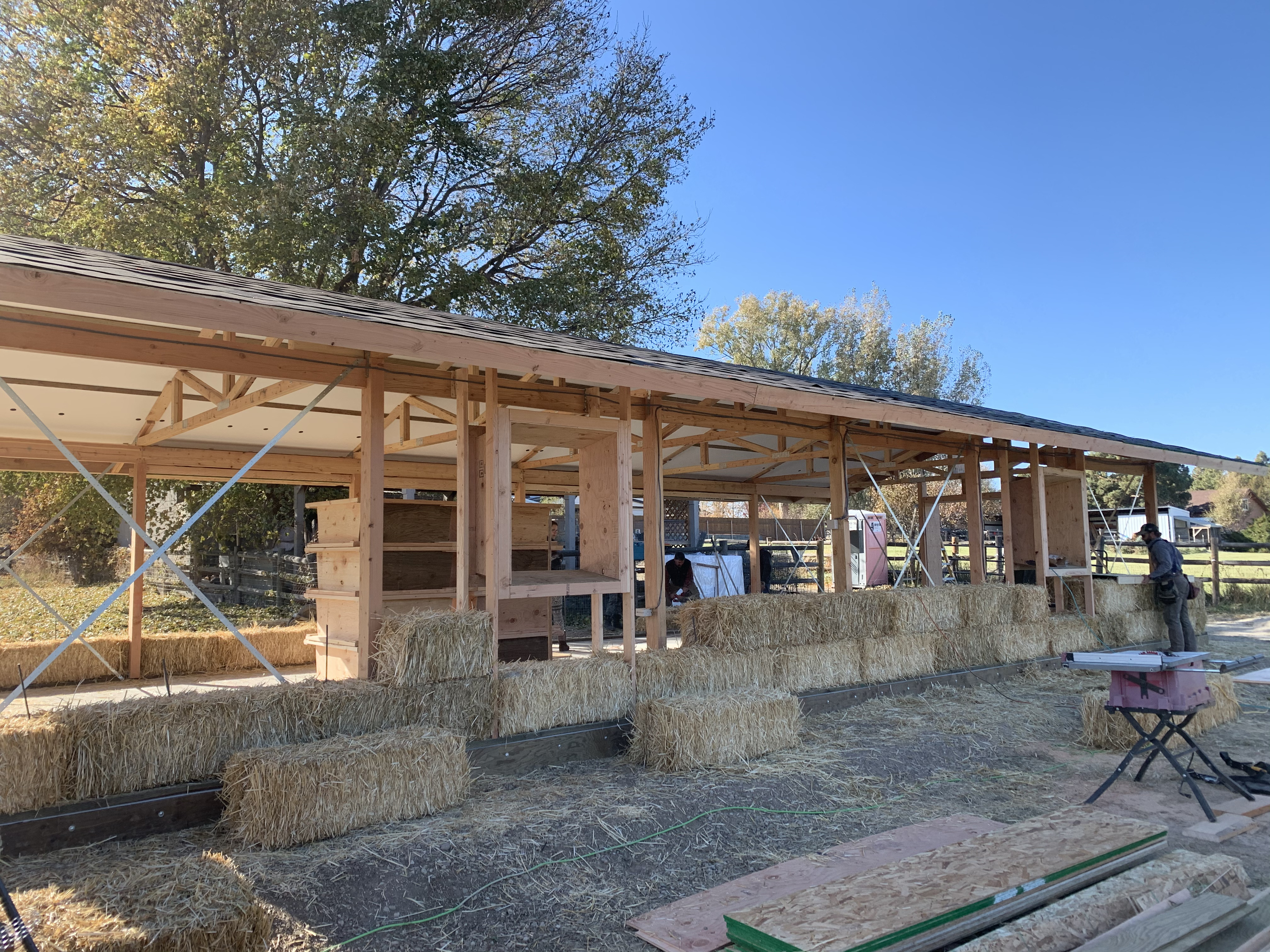
Proper detailing matters, and I want to be transparent about that. Good roof overhangs, proper flashing, a well-designed foundation detail that keeps the bales up off the ground, and quality plaster application are all essential. These are not optional. They are part of building a straw bale home correctly. And when they are done right, the moisture performance of these walls is exceptional.
Ron Hixon taught me that building with natural materials is not about cutting corners or hoping for the best. It is about understanding how materials work and detailing them properly. Every straw bale home we build at EarthCraft Construction is designed with moisture management as a primary consideration. We think about where water comes from, where it goes, and how the wall assembly handles it throughout every season.
Here is something else that surprises people. The air quality inside a straw bale home is typically superior to a conventional home, in part because of how the walls handle moisture. Stable humidity levels, natural materials that do not off-gas volatile organic compounds, and a wall system that breathes rather than seals. These factors contribute to an indoor environment that is healthier and more comfortable.
I have been doing this long enough to have seen the inside of straw bale walls that are decades old. When a straw bale home is built correctly, the straw inside those walls stays dry, intact, and free of mold. It does not degrade. It does not rot. It does what it was designed to do.
The misconception that straw bale homes are susceptible to mold comes from the same place as the fire myth. People hear "straw" and they think of wet hay sitting in a field. That is not what is inside your walls. Compressed, dry straw bales sealed in a plaster assembly are a fundamentally different material system than loose straw in an open environment.
If mold and moisture have been the concern keeping you from taking straw bale construction seriously, I would challenge you to look at the building science. Look at how vapor-open wall assemblies perform. Compare the moisture management of a thick, breathable straw bale wall to a standard 2x6 wall with fiberglass insulation and a poly vapor barrier. The data tells a clear story.
And that story is this: straw bale walls do not just resist mold. They manage moisture in a way that makes mold far less likely than in the conventional home your neighbors are building down the street.Moisture. Mold. Mildew. These are the words that come up in almost every conversation I have with someone who is curious about straw bale construction but not yet convinced. And I respect the concern. Mold in your walls is a serious problem in any home, and asking tough questions before you build is exactly what a smart homeowner should be doing.
So let me give you the straight answer, and then I will explain why.
Straw bale wall assemblies handle moisture and water vapor orders of magnitude better than conventional wall assemblies. Not slightly better. Not about the same. Orders of magnitude better.
I know that sounds like a bold claim. So let me walk you through the building science behind it.
The reason mold develops in walls is simple. Moisture gets trapped in a place where it cannot dry out, the temperature is right, and organic material is present for the mold to feed on. In conventional construction, this happens more often than most people realize. Vapor barriers in the wrong location, insulation that traps moisture against cold sheathing, building wraps that prevent drying. These are common problems in standard wall assemblies that lead to hidden mold behind your drywall.
A straw bale wall works differently. The thick, plaster-coated straw bale assembly is what building scientists call a "vapor-open" system. Moisture can move through the wall and dry to the exterior or interior depending on conditions. The wall breathes. It is not trapping moisture in a tight cavity the way a 2x6 wall with a polyethylene vapor barrier does.
This is critical to understand. The plaster skins on the inside and outside of a straw bale wall are permeable. They allow water vapor to pass through at a rate that prevents accumulation. The straw itself has a remarkable ability to absorb small amounts of moisture and release it as conditions change. It is a self-regulating system, and it works because of the physics of the materials, not in spite of them.
Now, can a straw bale wall get wet? Of course it can. Any wall can get wet. The question is what happens when it does. In a conventional wall, trapped moisture leads to condensation on cold surfaces, which leads to mold growth in hidden cavities where you cannot see it until the damage is extensive. In a straw bale wall, the vapor-open assembly allows moisture to move and dry. The wall does not trap it.
Proper detailing matters, and I want to be transparent about that. Good roof overhangs, proper flashing, a well-designed foundation detail that keeps the bales up off the ground, and quality plaster application are all essential. These are not optional. They are part of building a straw bale home correctly. And when they are done right, the moisture performance of these walls is exceptional.
Ron Hixon taught me that building with natural materials is not about cutting corners or hoping for the best. It is about understanding how materials work and detailing them properly. Every straw bale home we build at EarthCraft Construction is designed with moisture management as a primary consideration. We think about where water comes from, where it goes, and how the wall assembly handles it throughout every season.
Here is something else that surprises people. The air quality inside a straw bale home is typically superior to a conventional home, in part because of how the walls handle moisture. Stable humidity levels, natural materials that do not off-gas volatile organic compounds, and a wall system that breathes rather than seals. These factors contribute to an indoor environment that is healthier and more comfortable.
I have been doing this long enough to have seen the inside of straw bale walls that are decades old. When a straw bale home is built correctly, the straw inside those walls stays dry, intact, and free of mold. It does not degrade. It does not rot. It does what it was designed to do.
The misconception that straw bale homes are susceptible to mold comes from the same place as the fire myth. People hear "straw" and they think of wet hay sitting in a field. That is not what is inside your walls. Compressed, dry straw bales sealed in a plaster assembly are a fundamentally different material system than loose straw in an open environment.
If mold and moisture have been the concern keeping you from taking straw bale construction seriously, I would challenge you to look at the building science. Look at how vapor-open wall assemblies perform. Compare the moisture management of a thick, breathable straw bale wall to a standard 2x6 wall with fiberglass insulation and a poly vapor barrier. The data tells a clear story.
And that story is this: straw bale walls do not just resist mold. They manage moisture in a way that makes mold far less likely than in the conventional home your neighbors are building down the street.
