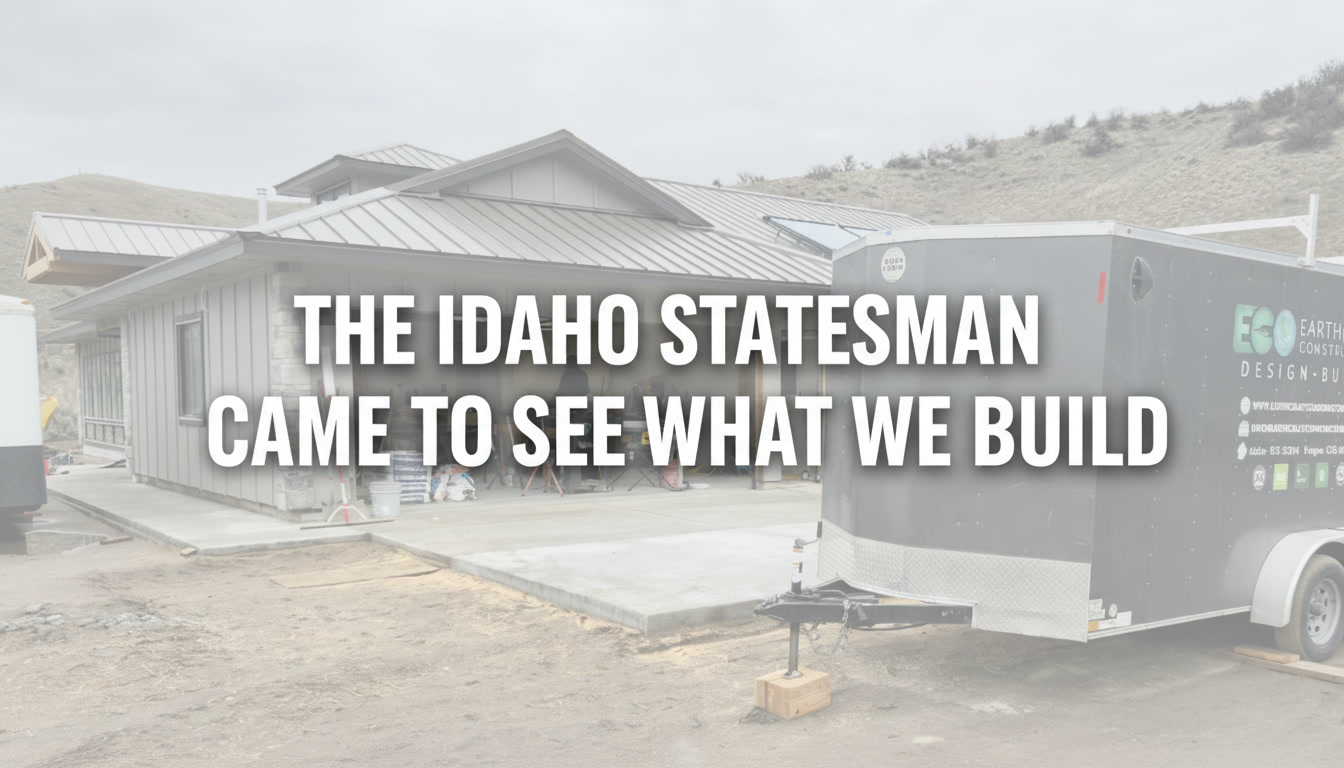
The Idaho Statesman Came to See What We Build
The Idaho Statesman Came to See
What We Build
Every so often someone outside the green building world takes a real look at what we do, and it is worth pausing on. The Idaho Statesman recently ran a feature on one of our homes in the Boise Foothills, a straw bale build we call Bitterbrush. Reporter Noah Daly walked the property, talked through the design with me, and came away with a story that gets at something we have been saying for years. These are not novelty houses. They are some of the highest performing, most durable homes you can build.
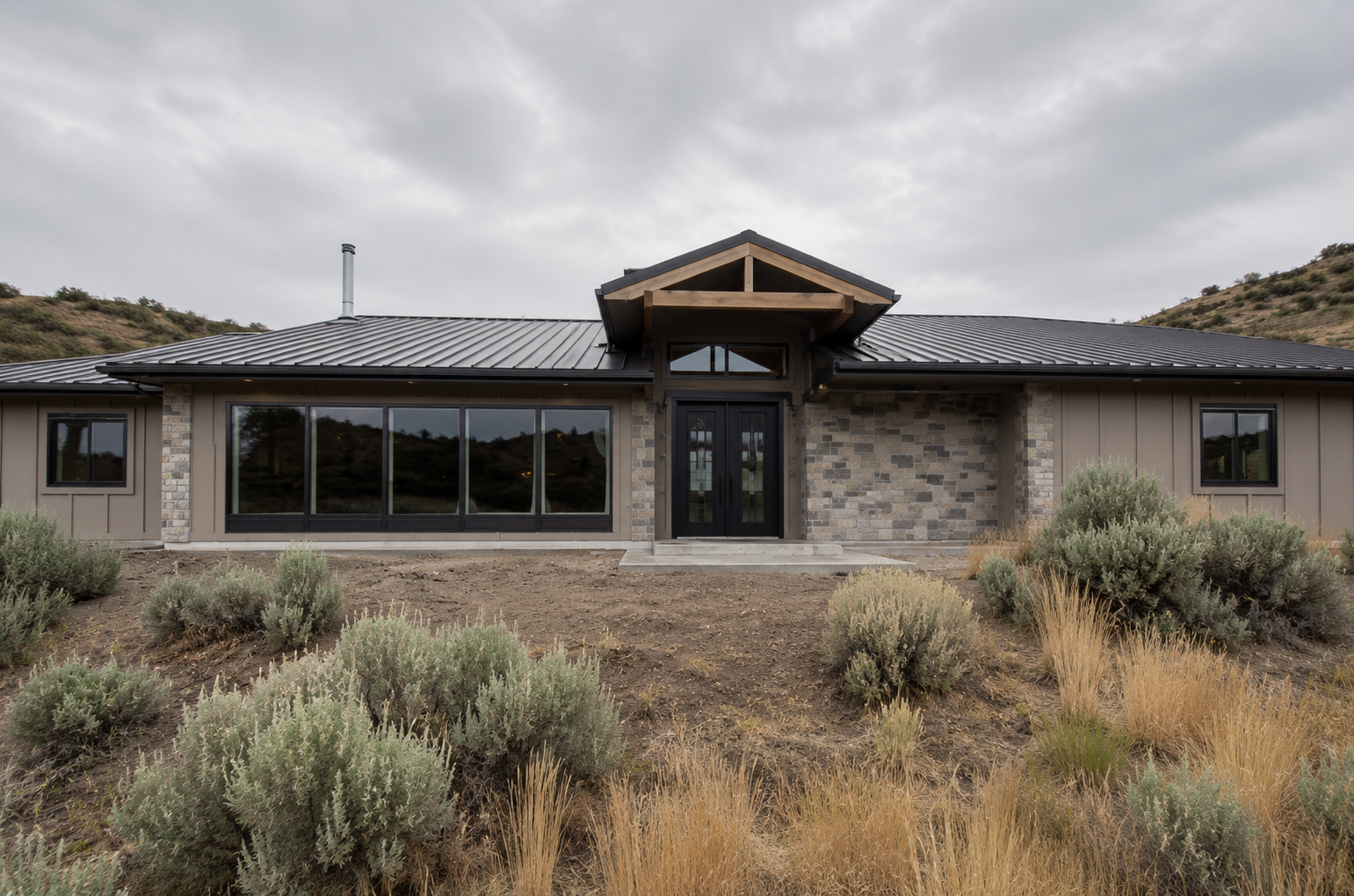
If you have been around Idaho for any length of time, you have seen straw bales stacked in barns and fields. Most people think of them as livestock bedding. What most people do not know is that the same material, stacked tight and sealed in clay plaster, makes a wall that outperforms conventional construction on almost every measure that matters.
The article covered a few things I want to highlight, because they are the questions we hear most often.
The first is energy. Straw bale walls insulate so well that the homes need far less energy to heat and cool than a standard stick-frame house. That is not a marketing claim. It shows up in independent research, including a study out of Oslo Metropolitan University that the Statesman cited. For a homeowner, that difference compounds year after year in lower utility bills and a home that holds its temperature without fighting the weather.
The second is fire. This is the big misconception, and I am glad the reporter dug into it. People hear straw and picture kindling. A plastered straw bale wall is the opposite of loose tinder. The bales are packed so tightly and sealed so completely that there is not enough oxygen inside the wall for a fire to take hold. It smolders instead of burning. As wildfire seasons get longer and more intense across the Northwest, that kind of fire resistance is moving from a nice feature to a real reason people are calling us.
The third is design. The Statesman picked up on the small choices that make a big difference, like the way we angled the awnings over the main living space so the summer sun stays off the glass and the winter sun reaches in to warm the concrete floor. There is also a solar hot water system that pre-heats water before it ever reaches the electric heater, which takes one of the biggest energy draws in a typical home and shrinks it down.
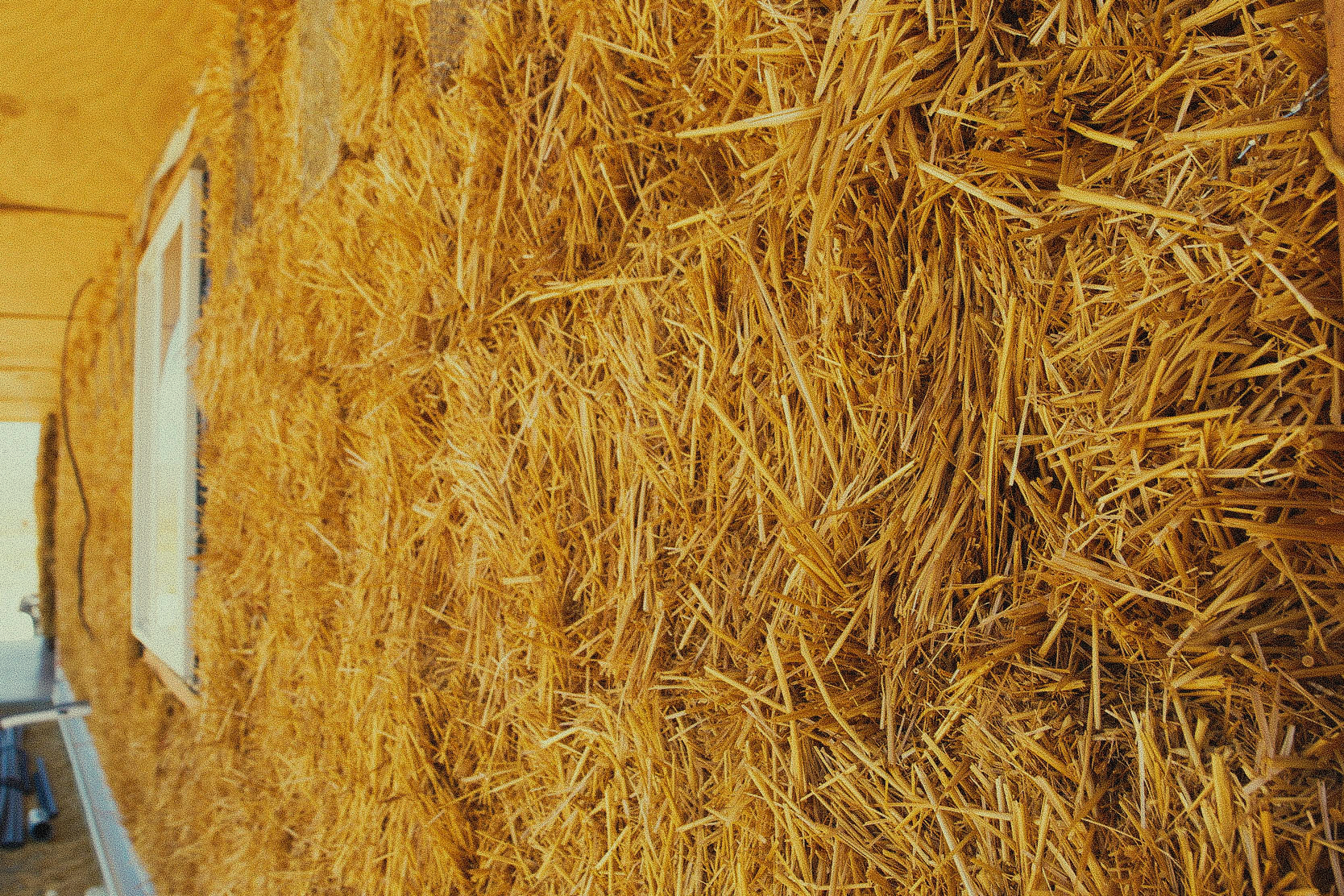
What I appreciated most was where the story landed at the end, on reuse. Straw is an agricultural byproduct. It has already done its job in the field. When we build with it, we give that material a second life inside the walls of a home meant to stand for generations. That is the part that still gets me, after all these years.
The full feature is worth a read, and it captures the work better than I could summarize here. Take a look, and if it gets you thinking about your own build, that is exactly the conversation we like to have.
