The Fresh-Air System a Tight Home Actually Needs
The Fresh-Air System a Tight Home Actually Needs
Does a High-Performance Home Need a Fresh-Air Ventilation System?
Here is a question that surprises people. If a high-performance home is built to be so tight and well-sealed, how does it breathe? It is a genuinely good question, and the answer points to one of the mechanical systems that actually does belong in a well-built home, even one that needs almost no heating. The answer is fresh-air ventilation, and understanding it clears up a common confusion about how healthy homes really work.
A great home is not just sealed up tight. It is sealed up tight and then given a deliberate, controlled way to breathe. Those two things together, not either one alone, are what make a home both efficient and healthy.
Why a tight home needs deliberate fresh air
Start with why tightness matters in the first place. A high-performance home is carefully sealed against uncontrolled air leakage, because random drafts through gaps and cracks waste energy and let in dust, allergens, and outside air you did not ask for. Sealing the home tight is a big part of why it holds its temperature so well.
But a tightly sealed home needs fresh air brought in on purpose, because it is no longer coming in by accident through all those leaks. Cooking, breathing, showering, daily living, all of it adds moisture and stale air that needs to be exchanged for fresh. In a leaky conventional house this happens haphazardly through the gaps, at the cost of comfort and efficiency. In a well-built tight home, fresh air is delivered deliberately, in a controlled and efficient way. Tightness and ventilation are two halves of the same idea. You seal the home against random leakage, then you give it a smart, intentional way to breathe.
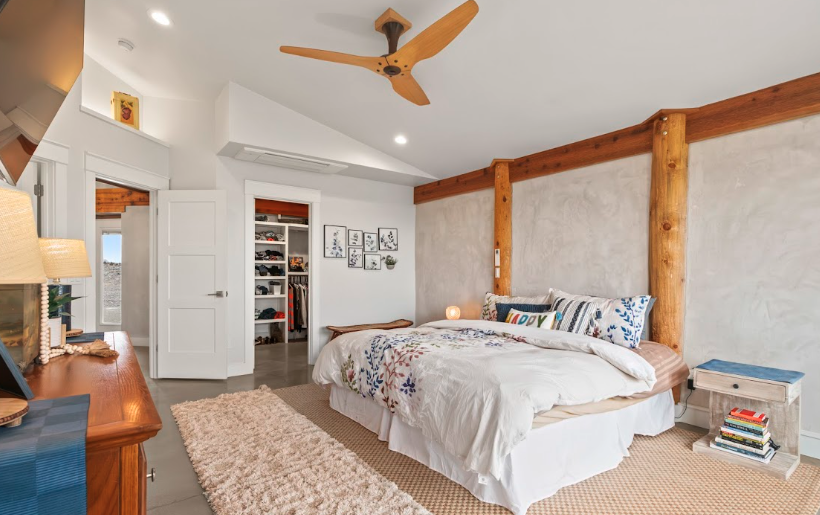
How an ERV works
The system that does this elegantly is an energy recovery ventilator, or ERV. It is one of the genuinely worthwhile pieces of mechanical equipment in a high-performance home, and it does something clever.
An ERV continuously exchanges stale indoor air for fresh outdoor air. But instead of simply dumping your conditioned air outside and hauling in raw outdoor air, it passes the two air streams close together and transfers much of the energy from the outgoing air to the incoming air. In winter, the warmth from the air leaving the home is used to pre-warm the fresh air coming in. In summer, it works the other way. The result is a constant supply of fresh air without throwing away the comfort you have worked to create. You get the ventilation without paying the full energy price for it.
Fresh air as a health system
The payoff is a home that is always quietly breathing clean, fresh air, and that is a health benefit worth taking seriously. A steady supply of fresh air keeps indoor air quality high, manages humidity, and clears out the stale air and everyday pollutants that build up in any occupied home.
This connects directly to why people build natural homes in the first place. When the walls are breathable and free of off-gassing, and the finishes are chosen to keep the air clean, a good ventilation system completes the picture, continuously refreshing that clean air rather than letting it go stale. The whole home becomes a system for healthy air, the materials keeping pollutants out and the ventilation keeping fresh air moving in. For anyone who cares about the air their family breathes, and especially for anyone with sensitivities, this is one of the most valuable systems in the house.
The right mechanicals, not the default ones
There is a broader principle here worth naming. A high-performance home lets you rethink which mechanical systems you actually need. It often needs far less heating than a conventional home, so an oversized furnace and sprawling ductwork may not belong. But fresh-air ventilation genuinely does belong, because it serves the home's health and works with its efficiency rather than against it.
This is what thoughtful design looks like, choosing the systems that truly serve the home rather than installing the standard package out of habit. You question the big furnace because the home may not need it. You embrace the ventilation system because a tight, healthy home genuinely does. The result is a home with the right mechanicals for how it actually performs, not a default set of equipment sized for a house built the old way.
Sealed tight, breathing clean
So the answer to how a tight home breathes is that it breathes on purpose. It is sealed against the random, wasteful leakage of a conventional house, and then given a deliberate, efficient, health-first way to bring in fresh air. Tight envelope, smart ventilation, working together.
That combination is the mark of a home designed as a complete system rather than a collection of parts. The tight, well-insulated shell holds the temperature. The ventilation keeps the air fresh and clean without wasting the comfort inside. Together they give you a home that is efficient and healthy at the same time, which was the goal all along. A high-performance home does not just hold its heat. It breathes clean air while it does it, and that is exactly how a healthy home is supposed to work.