How Energy Efficient Is a Straw Bale Home? R-Values, Performance, and Real Results
How Energy Efficient Is a Straw Bale Home? R-Values, Performance, and Real Results
If you are researching high-performance home construction, you have probably spent hours comparing insulation types, wall assemblies, and energy ratings. You have looked at spray foam, rigid board, cellulose, maybe even double-stud walls with dense-pack. And somewhere in that research, straw bale showed up and you were not sure what to make of it.
Let me give you the numbers first, because numbers do not have opinions.
Straw bale walls deliver insulation values in the range of R-30 to R-45, depending on bale orientation, density, and wall assembly details. Compare that to conventional wood-framed walls with standard insulation, which typically come in at R-13 to R-19. That is not a small difference. That is a fundamentally different category of thermal performance.
But R-value only tells part of the story. What matters to the family living inside the home is what those numbers translate to in the real world. So let me tell you what we have seen on actual projects.
On our Emmett straw bale project, a 2,850-square-foot custom home on 40 acres in the foothills, we incorporated passive solar orientation and straw bale wall assemblies as part of a high-performance building strategy. The result was a home that required zero HVAC usage from January through March of 2023.
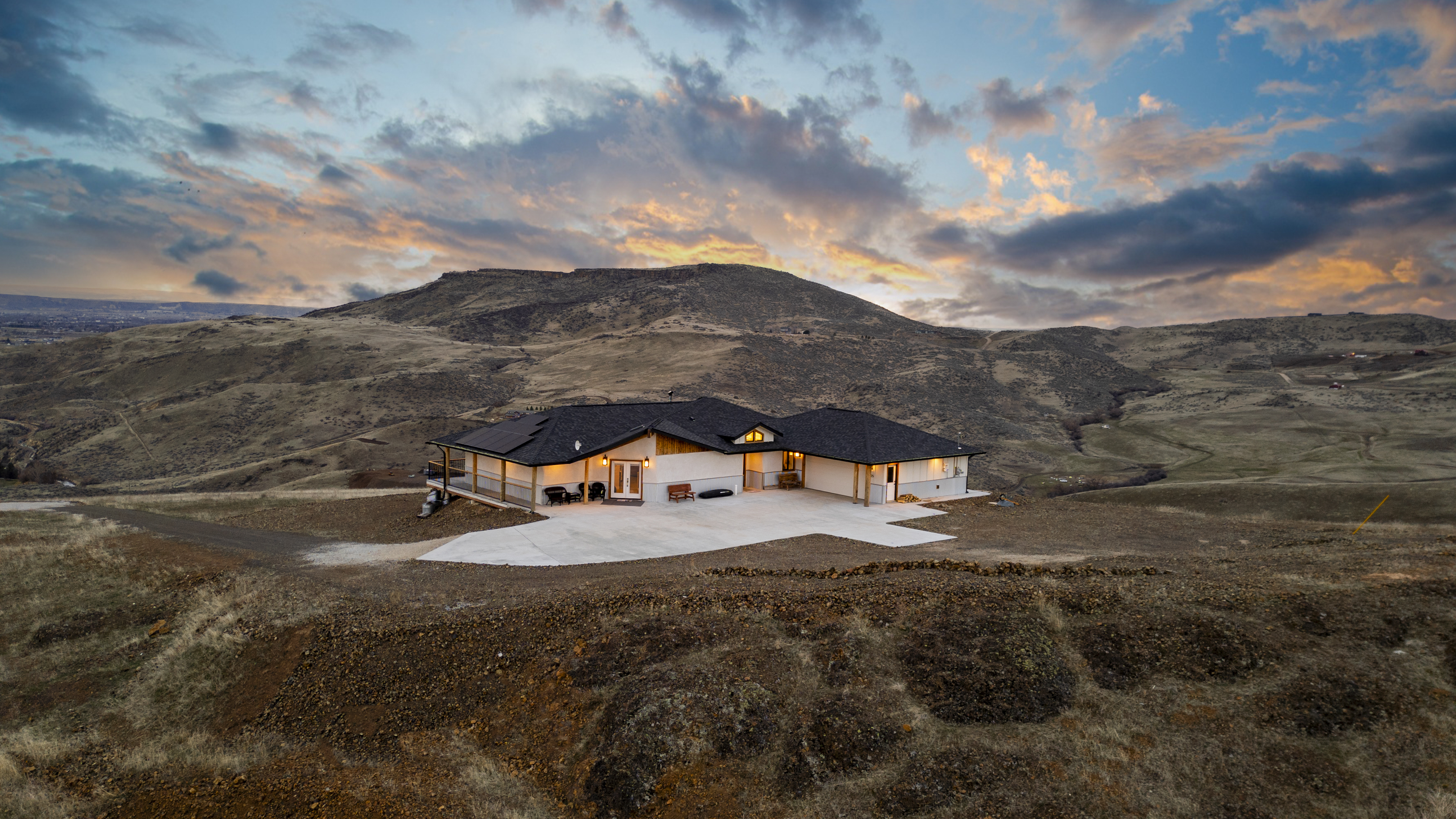
Let that sink in for a moment. Three months of Idaho winter. No furnace. No heat pump. No electric baseboard heaters clicking on in the middle of the night. The passive solar design collected heat through south-facing windows, the thermal mass in the home stored it, and those R-30-plus straw bale walls held it in.
The only supplemental heat source used during that period was a single high-efficiency wood-burning stove. That is it. That is the whole heating system for three months of winter in a nearly 3,000-square-foot home in the Idaho foothills.
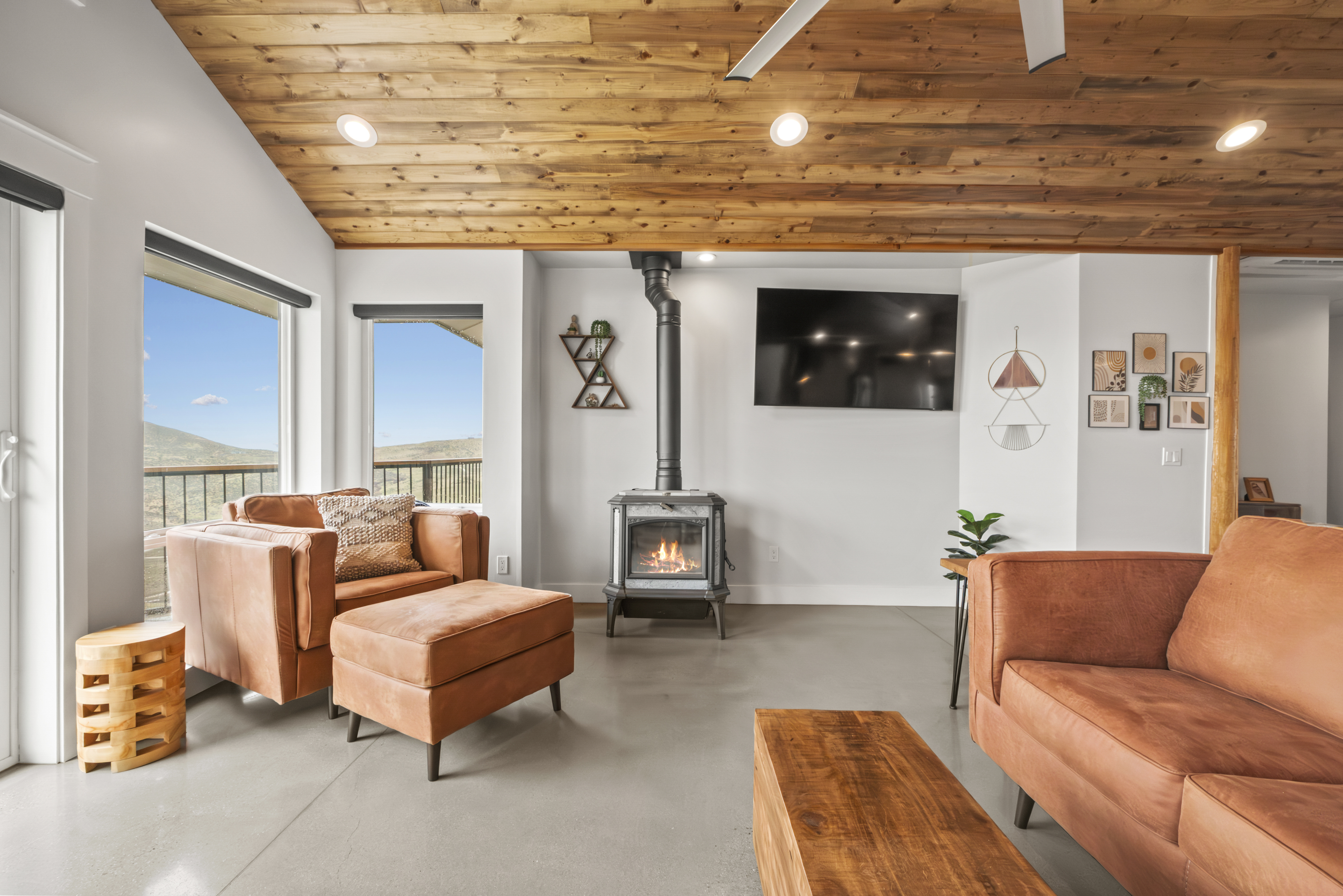
This is what high-performance construction looks like in practice. It is not theoretical. It is not projected. It is measured, documented, and lived in by a real family in a real Idaho winter.
The broader data supports what we are seeing on our projects. Straw bale homes consistently demonstrate roughly 30 percent lower heating and cooling costs compared to conventional construction. That is a significant reduction in energy consumption over the life of a home. And when you are building something designed to last 100-plus years, those savings compound into something extraordinary.
There is another dimension to this that does not get enough attention. Straw bale walls do not just resist heat transfer. They manage moisture and air movement in ways that contribute to overall building performance. The thick, breathable wall assembly allows water vapor to move through the wall without getting trapped. This means the walls regulate humidity naturally, which reduces the load on mechanical systems and contributes to a more comfortable, stable indoor environment.
You also get remarkable sound attenuation. An 18-inch-thick straw bale wall creates a buffer between the inside of your home and the outside world that you have to experience to appreciate. People who walk into a straw bale home for the first time almost always comment on how quiet it is. That thickness and density absorb sound in a way that a standard 2x6 wall simply cannot match.
I want to be clear about something. We do not build straw bale homes because it is novel or because it makes for a good story at a dinner party. We build them because they perform. Ron Hixon understood this when he started EarthCraft Construction decades ago. The performance data backs up what he knew intuitively as a builder and what we continue to prove with every project we complete.
When I take a raw piece of land and start planning a custom home with a client, energy performance is baked into every decision from the beginning. Orientation on the lot. Window placement and sizing. Thermal mass strategy. Wall assembly. These are not afterthoughts. They are the foundation of what makes a home truly serve a family for generations.
Straw is a carbon-negative building material. It sequesters more carbon than any other natural insulation. It is a renewable agricultural byproduct that regenerates annually and can be sourced locally. So when you combine the energy savings during the life of the home with the carbon benefit of the material itself, you are looking at a building system that is working for the environment on both sides of the equation.
Every home we build at EarthCraft is designed with energy performance as a core principle, not an afterthought. We do not bolt efficiency onto a conventional design and call it green. We start with performance from the very first conversation about how the home will sit on the land, where the windows will face, and how the building envelope will work as a system. That is the only way to achieve the kind of results we documented on the Emmett project.
If you are serious about building a home that performs at the highest level, one that keeps your family comfortable without being dependent on massive mechanical systems, I would encourage you to look hard at what straw bale construction delivers. The R-values are real. The energy savings are real. And the comfort of living inside these walls is something you have to feel for yourself.
