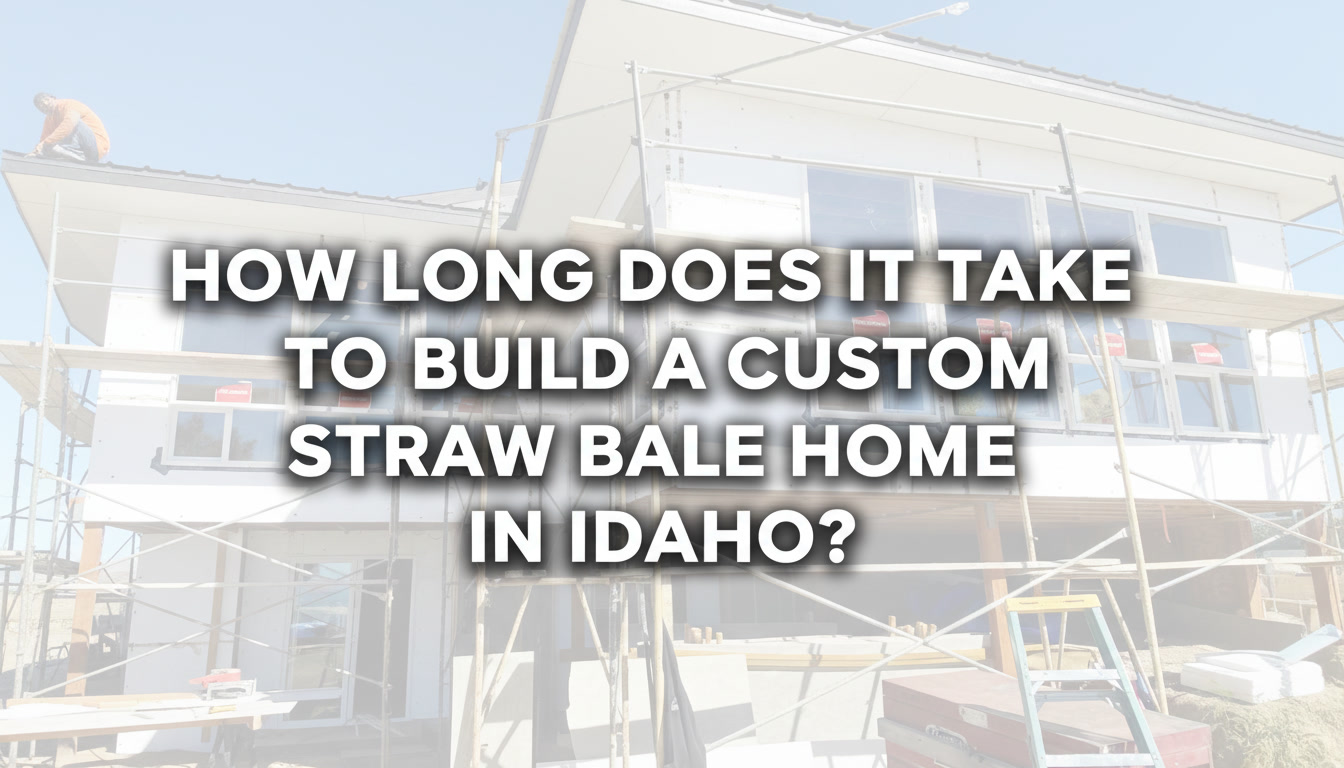
How Long Does It Take to Build a Custom Straw Bale Home in Idaho?
How Long Does It Take to Build a Custom Straw Bale Home in Idaho?
It is one of the first questions every serious client asks, and it deserves a straight answer. How long does it take to build a custom straw bale home in Idaho? The honest version is that a true custom home is not a quick build, and you should be cautious of anyone who promises that it is. But the timeline is also more predictable than most people fear, especially when one firm owns the entire process from design through completion.
Let me walk you through where the time actually goes, because understanding the phases is the key to having realistic expectations and to seeing why some projects move smoothly while others stall.
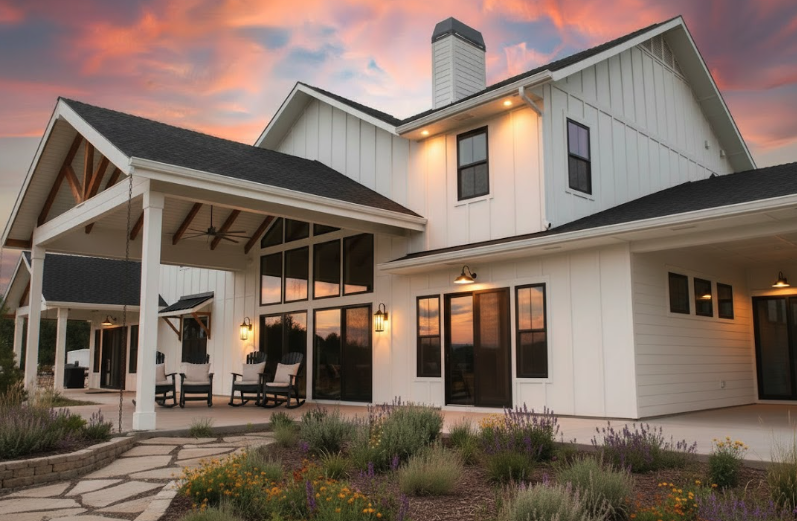
The first phase is design, and it is the phase people most often underestimate. This is where we talk through how you actually live, study your land, and develop the floor plan and the systems that will define the home for the next hundred years. For a custom home, design is not a step to rush. It is the step that determines whether everything downstream goes well. The decisions made here, orientation, layout, the wall system, the passive solar strategy, are the ones you cannot easily change later. A thoughtful design phase saves far more time and money than it costs, because the alternative is discovering problems during construction when they are expensive to fix.
The second phase is permitting and engineering. Construction drawings get finalized, structural engineering is completed, and the project goes through the local permitting process. Timelines here depend on the jurisdiction and on how complete and well-prepared the submission is. This is one of the quiet advantages of working with a builder who has done this in Idaho many times. A clean, complete submission that anticipates what the reviewers will ask moves faster than one that comes back with questions and corrections. Straw bale is well understood by Idaho building officials at this point, so the wall system itself is rarely the holdup.
Then comes construction. A straw bale home shares most of its timeline with any high-quality custom home. Site work, foundation, framing, roof, mechanical and electrical systems, interior finishes, and the exterior. The parts that are specific to straw bale, raising the bales and applying the plaster, are not what extends the schedule. In fact, a well-run bale raising can be one of the most efficient and rewarding parts of the entire build, and it is often where a Learn and Burn or a community raising brings real energy to a project. The plaster work takes care and proper curing time, and that is time worth taking. Rushed plaster is the one place where speed works against you.
So what makes one project finish on a predictable schedule and another drag on? It is almost never the straw. It is coordination. On a conventional project where you hire an architect and a contractor separately, the handoffs between design and construction are where time disappears. The architect designs something the budget does not support, the work goes back for revision. The contractor hits a detail the drawings did not resolve, work stops while everyone figures out who decides. Change orders pile up. Every one of those gaps is days or weeks added to your timeline, and you are the one standing in the middle managing it.
This is the real reason we build design-build, with one firm and one point of responsibility from the first sketch to the final walkthrough. When the same people who designed the home are building it, there are no handoffs to fall through. Decisions get made quickly because the person making them understands both the design intent and the construction reality. Problems get solved instead of debated. The timeline holds because nobody is waiting on anybody else. That integration does not just make the process less stressful. It is one of the biggest factors in whether a custom home finishes when it should.
Weather plays a role too, as it does for any Idaho build. Winter affects site work and exterior plaster. A good builder sequences the project around the seasons so the weather-sensitive work happens in the right window. That kind of planning is invisible when it goes well and painfully obvious when it does not.
The honest takeaway is this. A custom straw bale home in Idaho takes the time a serious custom home takes, and that time is an investment in getting it right rather than a delay to apologize for. What you can control is how smoothly that time passes, and that comes down to the design phase being thorough and the design and construction being owned by the same hands. Do those two things and your timeline becomes predictable, your stress drops, and the home you move into is the one you actually designed.
If you are thinking about a timeline for your own project, the most useful thing we can do is sit down, look at your land and your vision, and give you a realistic schedule built around your specific build instead of a number pulled from the air. That conversation is where a real timeline starts.
