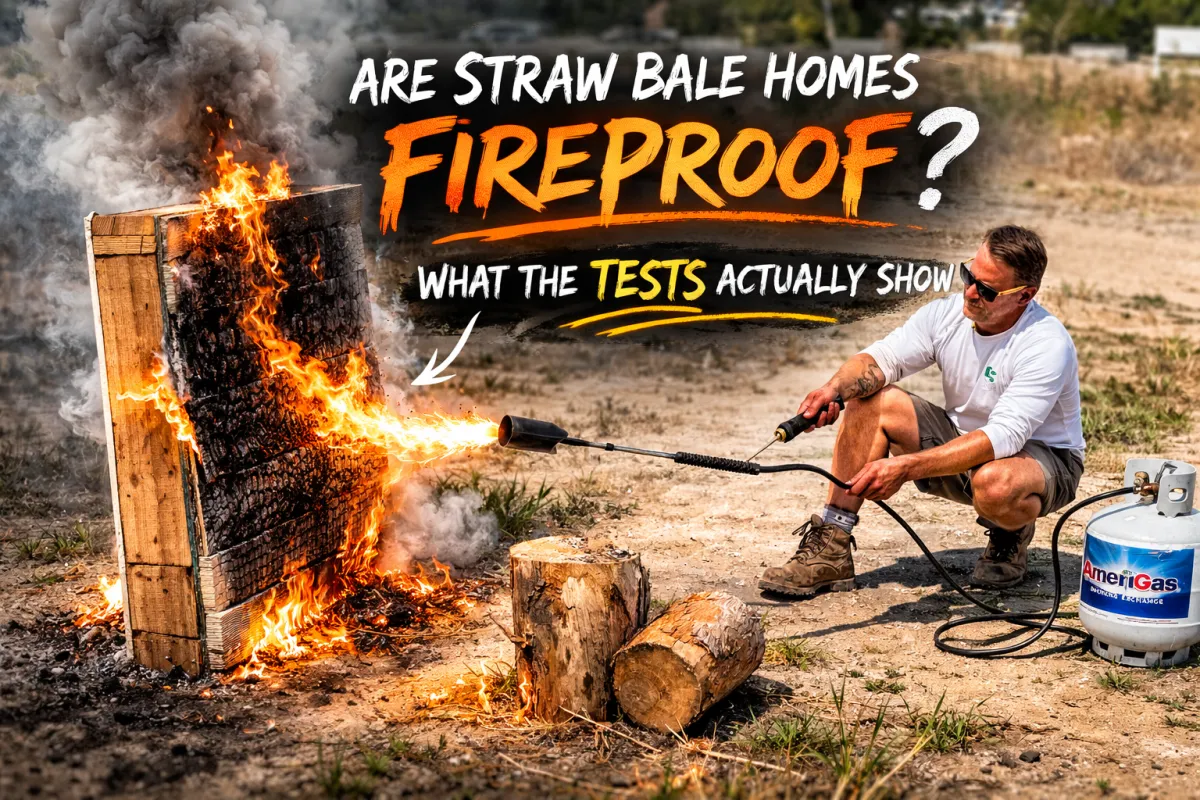
Is Straw Bale Construction Fireproof? What the Testing Actually Shows
Is Straw Bale Construction Fireproof? What the Testing Actually Shows
I hear it every single time. Every consultation, every workshop, every dinner party where somebody finds out what I do for a living. The first question out of their mouth is always the same: "But won't it just... catch fire?"
I get it. I do. You hear "straw" and your brain immediately goes to a haystack and a match. It makes perfect sense as a gut reaction. But here is the thing. That gut reaction is dead wrong. And I do not just mean a little wrong. I mean the opposite of reality wrong.
Let me walk you through what the science actually says, because I think you deserve better than a gut feeling when you are making decisions about where your family is going to live.
Straw bale wall assemblies have been tested under ASTM E-119, which is the standard fire resistance test used across the construction industry in the United States. This is not some fringe test or a favor from a friendly lab. This is the same protocol used to rate the fire resistance of every commercial and residential wall system in the country. And straw bale walls have achieved more than two hours of direct flame resistance under this test.
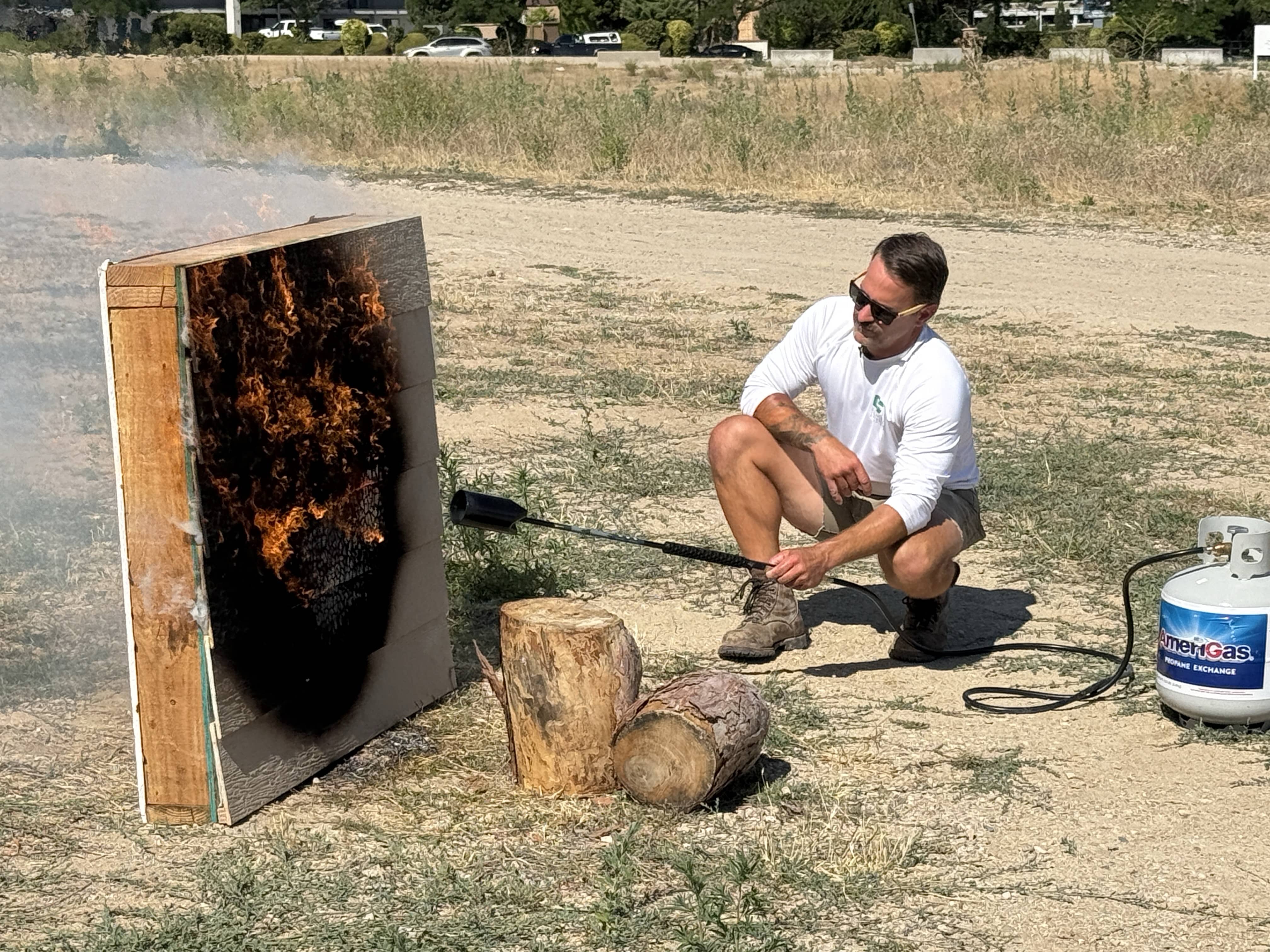
Let me put that in perspective. Two hours of direct, sustained flame contact. Most conventional wood-framed walls with standard insulation do not come close to that. The dense compression of straw bales inside a plastered wall assembly creates something that behaves much more like a fire-resistant block than anything resembling loose straw.
Think about it this way. Take a phone book and try to light it on fire. You cannot do it. The pages are too tightly compressed for oxygen to get in and feed a flame. Now take a single sheet of paper out of that phone book and hold a match to it. It lights instantly. That is the difference between a compressed straw bale wall and the loose straw you are picturing in your head. They are not the same material in any functional sense.
The plaster coating on the interior and exterior of a straw bale wall adds another significant layer of fire protection. Lime and cement plasters are non-combustible materials. They create a thermal barrier that protects the straw inside from heat exposure. The combination of dense straw and plaster creates a wall system that outperforms many conventional assemblies in fire testing.
And this is not just lab data. The real world is proving it out in ways that matter. After the devastating wildfires in California, builders and code officials started paying serious attention to straw bale construction specifically because of its fire performance. Communities that had been skeptical suddenly wanted to know more. When you lose everything to a wildfire, you stop caring about what sounds weird and start caring about what works.
We have seen this firsthand. We are currently working on a project for a client whose family cabin burned down in a wildfire. What are we building to replace it? A straw bale structure. Because when someone has lived through watching a home burn to the ground, they do not want to rebuild with the same materials that failed them. They want something that will stand up to fire. They want straw bale.
I have been doing this work for years, carrying forward a legacy that Ron Hixon started decades ago here in the Boise Valley. Ron was a pioneer in this building method, and he understood something that the rest of the industry is only now catching up to. Building with natural materials is not a compromise. It is an upgrade. Fire performance is one of the clearest examples of that truth.
At our Learn and Burn events, we have demonstrated this in person. We take a section of straw bale wall and we put fire to it. People stand there watching, waiting for the dramatic moment when the straw catches and the whole thing goes up in flames. That moment never comes. What they see instead is a wall system that shrugs off direct flame contact. It changes everything about how they think about this material.
So when someone asks me if straw bale is a fire risk, I do not just tell them no. I tell them it is one of the most fire-resistant wall systems you can build with. Not in spite of being made from straw, but because of how that straw is used. Dense, compressed, sealed in plaster, and tested to the same standards as every other wall system in the country.
The data does not lie. The testing does not lie. And neither do the families who are choosing to rebuild with straw bale after losing homes to wildfire. They have seen both sides of this equation, and they are choosing the material that performs.
If fire safety is what has been holding you back from exploring straw bale construction, I would encourage you to look at the ASTM E-119 testing data. Look at what California is doing post-wildfire. And then ask yourself whether your assumptions about straw and fire are based on science or on a mental image that has nothing to do with how these homes are actually built.
Because the answer might surprise you. It surprises almost everyone.
