Beyond the Walls: The Natural Materials That Finish the Home
Beyond the Walls: The Natural Materials That Finish the Home
What Materials Finish the Inside of a Straw Bale Home?
People come to straw bale for the walls. The insulation, the quiet, the thickness, the performance. But once you are standing inside a finished home, something becomes clear that the wall conversation never quite captures. The walls set a tone, and everything else in the room either honors that tone or fights it.
A straw bale home finished in the same spirit as its walls feels like one complete, coherent thing. A straw bale shell filled with the same synthetic materials you would find in any conventional house feels like a compromise wearing a nice coat. The finishes matter, and getting them right is part of building a home that delivers on everything the walls promise.
The walls set the standard
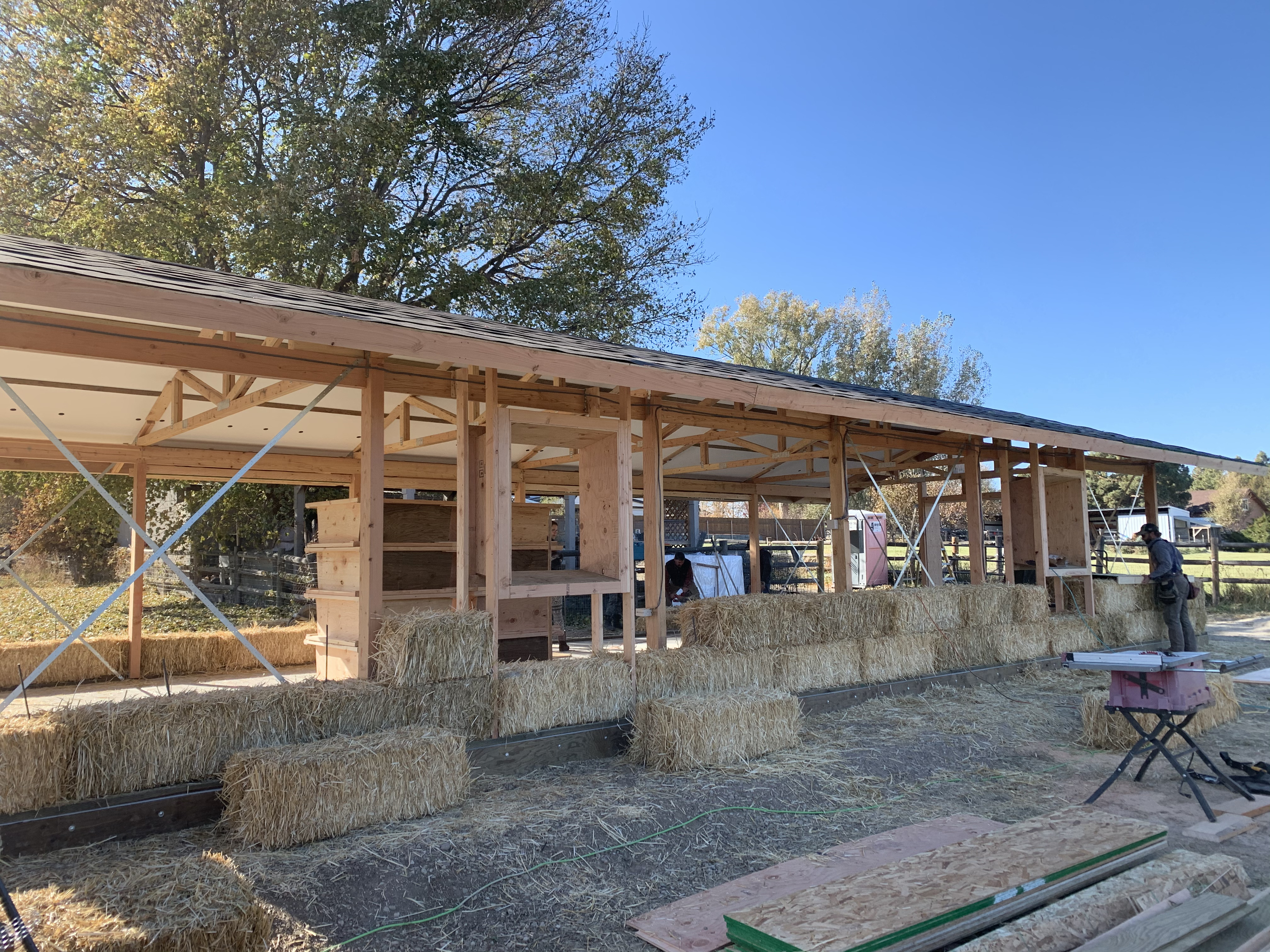
Think about what the walls already give you. A natural, breathable, hand-finished plaster surface. No off-gassing, no synthetic skin, just an honest material that feels good to live against. That sets a high bar for everything else that goes into the room.
Once you have walls like that, it would be strange to run cheap synthetic flooring across the floor, coat everything in high-VOC finishes, and fill the space with materials that quietly release chemicals into the air the walls worked so hard to keep clean. The whole point of building this way is a home that is healthy and grounded throughout, not just inside its wall cavities. So the finishes are chosen to carry the same standard all the way through.
Floors you can live on for life
Flooring is where this shows up most. In a home meant to last well over a century, the floor should be chosen with that same time horizon in mind.
Natural materials shine here. Real wood, stone, tile, and finished concrete all age well, wear honestly, and can last the life of the home rather than being torn out and replaced every decade or two. They also connect to the same values as the walls. A stone or tile floor pairs beautifully with the way these homes hold temperature, absorbing warmth from the winter sun and staying cool underfoot in summer. Wood brings warmth and life to a room. And how those floors are finished matters as much as the material itself. A natural oil or wax finish keeps a wood floor breathable and free of the synthetic film that off-gasses and eventually peels, and it lets the floor be spot-repaired for decades instead of sanded down and recoated. These are floors that get better with age and a little patina, not worse, which is exactly what you want in a home built for the long run.
Wood, stone, and honest surfaces
Beyond the floor, the same thinking runs through everything you touch. Real wood for trim, doors, cabinetry, and exposed beams brings a warmth and a connection to natural materials that no synthetic substitute matches. Stone and tile in the right places add durability and a grounded, permanent quality. Clay and lime finishes can carry the feeling of the plaster walls into other surfaces throughout the home.
The common thread is honesty. Natural materials look like what they are. They develop character over time instead of simply wearing out. And they keep faith with the reason someone chose to build this way in the first place, which was never only about a wall assembly. It was about a whole home that feels good to be inside.
Healthy air, all the way through
There is a practical payoff here, not just an aesthetic one. A big part of why people build natural homes is indoor air. When the walls are breathable and free of off-gassing, and then the finishes, the flooring, the cabinetry, the coatings, are chosen the same way, the result is a home with genuinely clean indoor air from the ground up.
This is where finishes stop being a decorating question and become a health question. Conventional interiors are full of materials that release compounds into the air for years. Choosing natural, low-toxicity finishes throughout means the air in the home stays as clean as the walls intended. For a family, especially anyone with sensitivities, that is not a small thing. It is one of the quiet reasons these homes feel different to be in.
A coherent home, inside and out
The finishes are where a straw bale home either becomes fully itself or falls short of what it could be. Carry the natural, durable, honest spirit of the walls through the floors, the wood, the stone, and the surfaces, and you get a home that is coherent from the outside face of the plaster to the boards under your feet. Everything belongs together. Everything was chosen with the same century-long, health-first, built-to-last thinking.
That coherence is exactly what a design-build approach protects. When one team is guiding both the shell and the finishes, the interior gets selected to match the walls rather than defaulting to whatever a subcontractor happens to install. The home ends up whole. And a whole home, natural and grounded from the walls all the way to the finishes, is what you actually feel the moment you walk in, long before anyone explains a single R-value to you.
