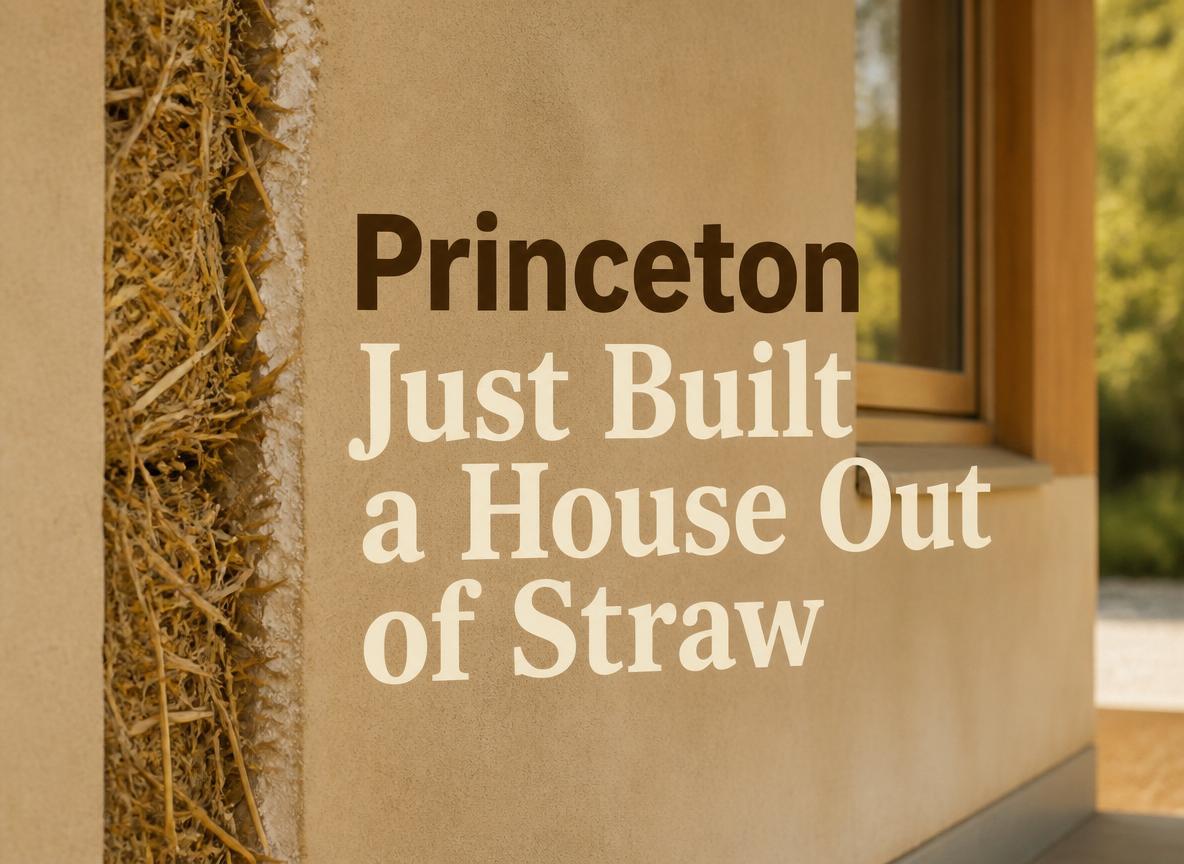
Princeton Just Built a House Out of Straw. Here's Why That Matters for the Future of Homebuilding.
Princeton Just Built a House Out of Straw. Here's Why That Matters for the Future of Homebuilding.
The New York Times covered it. Researchers spent three years proving it. We've been building it in Idaho for decades.
When the New York Times runs a feature on a house built entirely from straw, something has shifted in the broader conversation about construction. That shift isn't news to us. But it is validation worth talking about.
In May 2026, the Times profiled a research project led by professors at Princeton University. The result was a fully realized structure outside Hudson, New York, built from compressed structural strawboards, designed to carry load, insulate, and finish interior walls simultaneously, with no conventional framing required. The team spent more than three years on material testing before breaking ground. The article's central argument: the construction industry has been building backward, and agricultural straw may be one of the most powerful tools available to fix it.
We agree.
The Fable Got It Backwards
Most of us grew up with the same story: straw is what the foolish pig used, the one whose house fell down. Brick was safety. Straw was failure. That cultural conditioning has shaped how people think about building materials for more than a century.
The Princeton team's project opens by confronting that fable directly. And when you look at the actual numbers, the inversion is hard to argue with. The built environment accounts for roughly 40% of global carbon emissions. Conventional construction, concrete in particular, is a primary driver. Meanwhile, agricultural straw crops sequester carbon naturally at a scale roughly equivalent to the entire annual carbon output of the global concrete industry. The material sitting in fields after harvest isn't waste. It's a resource we've been burning or ignoring.
Straw bale construction, done right, doesn't just reduce carbon emissions. It stores carbon inside the walls of a home for the life of the structure. That's not a marketing claim. That's chemistry.
What the Princeton Project Actually Built
The prototype is a 150-square-foot structure, more proof-of-concept than production home. The engineering breakthrough was in the compression system. Instead of using straw bales as loose infill inside a wood frame (the traditional approach), the Princeton team used high-density compressed strawboards that perform three functions at once: they carry structural load, provide thermal insulation, and serve as the finished interior surface. No drywall. No separate insulation layer. No conventional framing.
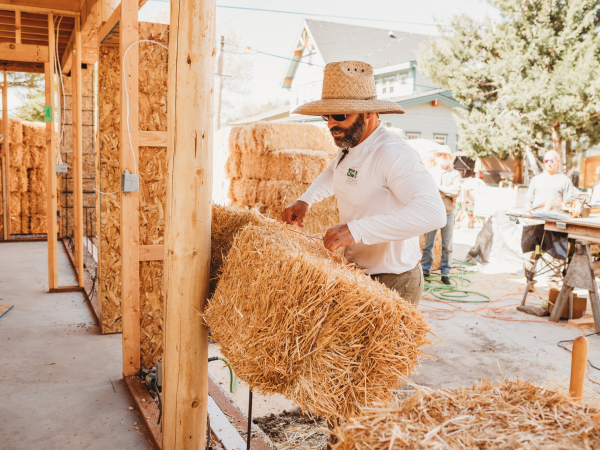
The exterior was protected by 33 hand-crafted thatch cassettes, a modular rainscreen system using natural thatch bundles. The whole assembly was prefabricated off-site, transported by trailer, and erected on location. One of the graduate students compared it to building from a flat-pack kit.
The expert commentary in the article came from the Rocky Mountain Institute, one of the most credible voices in sustainable building. Their position: this kind of simplified, bio-material building system is exactly what the industry needs to scale carbon-negative construction beyond experimental prototypes.
What This Means for Someone Building a Home Today
The Princeton project is a research prototype. It isn't what you build a 3,000-square-foot family home from, at least not yet. But the underlying principles have been proven in full-scale residential construction for decades, including here in the Boise Valley.
The things that made the Princeton prototype remarkable to the New York Times readership are things we've been engineering into custom homes for years. Walls that insulate at a level conventional framing can't match. Buildings that actively sequester carbon rather than generate it. Structures that perform better over time, not worse.
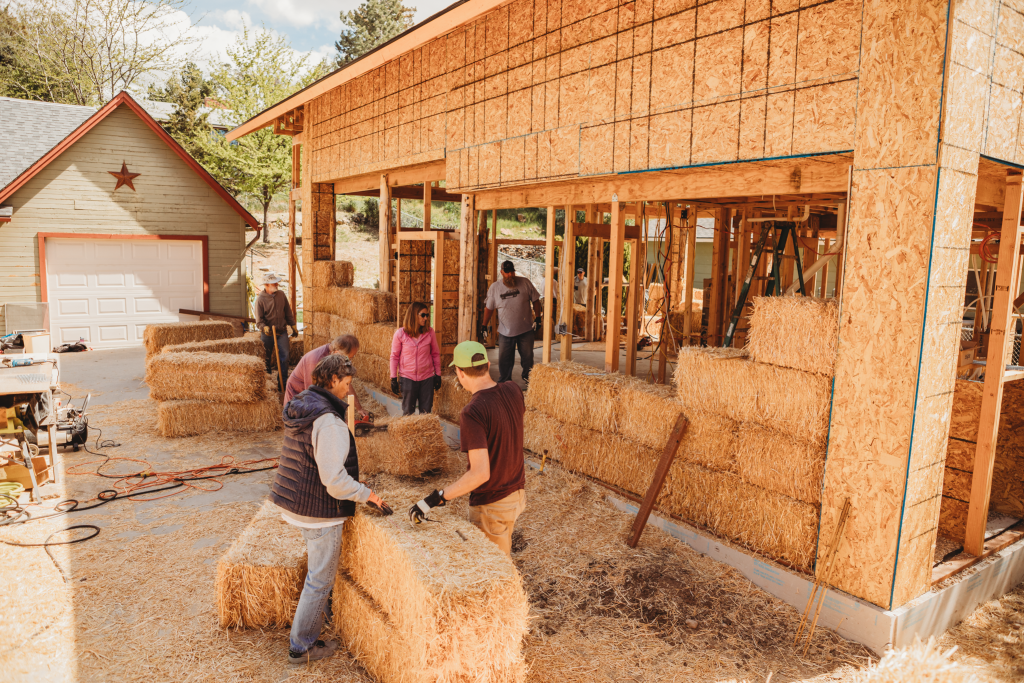
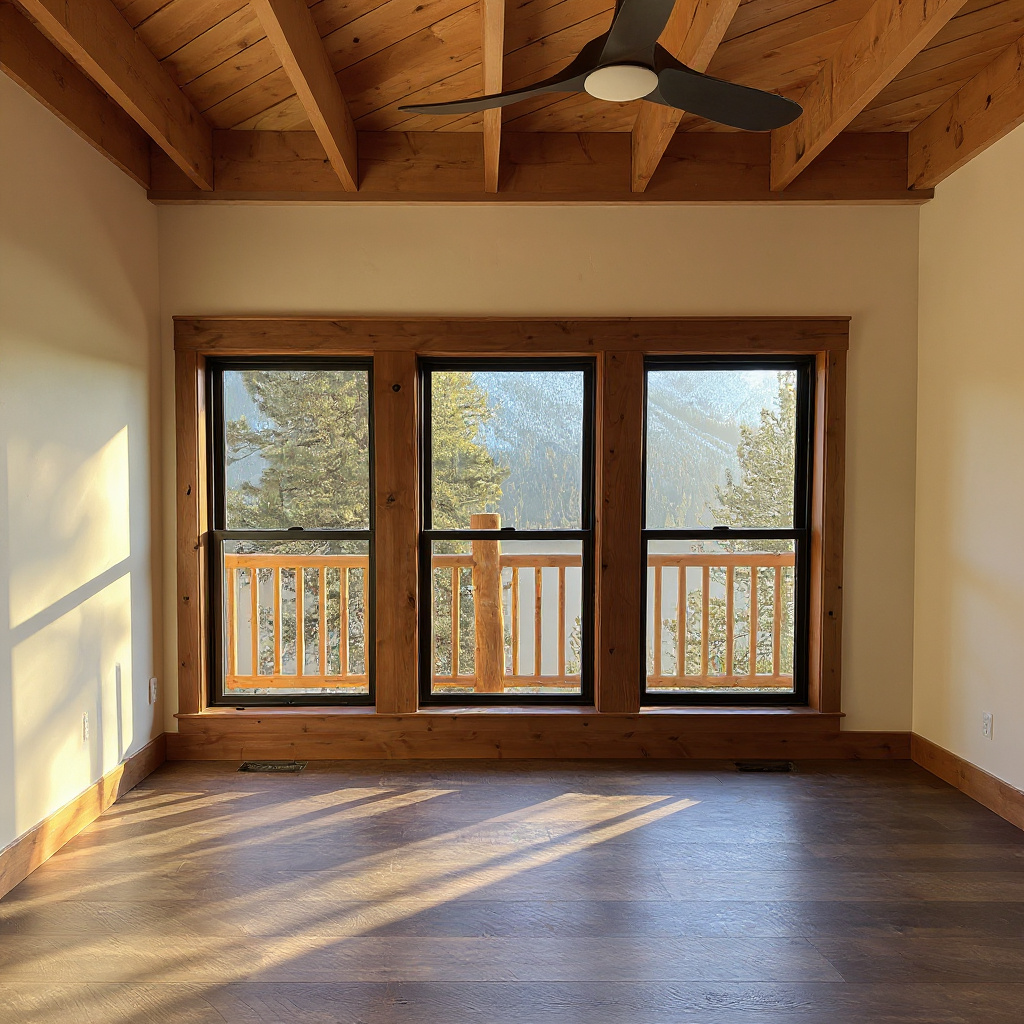
When we built the home we call Squaw Butte Straw Bale, we documented the performance data. January through March, zero HVAC usage. Not reduced. Zero. The thermal mass and insulation values inherent to straw bale construction held the interior temperature without mechanical assistance through an Idaho winter. That's the real-world version of what Princeton's researchers are trying to demonstrate at prototype scale.
Why Now Matters
There's a reason this research is landing in the Times right now. Wildfire pressure is reshaping what people require from homes in the West. Energy costs are making operating efficiency a financial issue, not just an environmental one. A generation of buyers is entering the market with a different set of values around what a home should do and what it should leave behind.
The construction industry is starting to catch up to where this material has always been. When Princeton's architecture professors and structural engineers spend three years and institutional resources proving that straw is a serious structural and environmental answer, it changes the conversation. It adds weight to what thoughtful builders have been doing in relative obscurity.
We've never needed the New York Times to know that straw bale works. But we're glad the conversation is getting louder.
If you're considering a custom home in the Boise Valley and you want to understand what high-performance straw bale construction actually looks like at full residential scale, we'd be glad to show you.
EarthCraft Construction Design Build | earthcraftconstruction.com
