Why Straw Bale Homes Hold Their Value in Idaho's Real Estate Market
Why Straw Bale Homes Hold Their Value in Idaho's Real Estate Market
You're investing $1.5M in a custom home in Idaho. You care about the quality and performance. But you also care about resale value. What happens if circumstances change and you need to sell?
For straw bale homes in the Boise Valley, resale value is strong and getting stronger. Let me walk you through why, and what that means for your $1M+ custom home investment.
The Historical Skepticism (That's Ending)
Ten years ago, straw bale homes were harder to resell. Buyers didn't understand the construction method. Appraisers had no comparable sales data. Lenders were skeptical. A straw bale home might appraise at 80 to 85 percent of construction cost.
That's changed dramatically. Here's why.
What Changed: Data, California Wildfires, and Market Awareness
Market data now exists. Idaho has years of straw bale sales history. Appraisers have comparable sales. They can look at what straw bale homes actually sold for in Boise Valley over the last five years. That data shows straw bale homes are holding 95 to 100 percent of construction cost, with some appreciating above construction cost.
California wildfires proved fire performance. After devastating wildfires, builders in California started rebuilding with straw bale specifically because of ASTM E-119 fire testing data. That public knowledge shifted perception from "risky experiment" to "proven performance." Idaho buyers followed.
Energy costs became visible. Straw bale homes with documented $30 to $80 monthly utility costs became known. Conventional homes cost $150 to $300 per month. The difference is $1,440 to $3,240 per year. Over 30 years, that's $43,200 to $97,200. Potential buyers see that math and understand the value.
The eco-conscious buyer base grew. Idaho's high-net-worth population increasingly values environmental performance and health. Straw bale homes deliver on both fronts. For this buyer, straw bale isn't a niche choice. It's the obvious choice.
Why Straw Bale Homes Appreciate or Hold Value
Operating cost is the primary value driver. A buyer is willing to pay premium for a home that costs 30 to 90 percent less to operate. Over the life of ownership, that operating cost advantage is worth tens of thousands of dollars. Savvy buyers factor that into their offer.
Durability is real and proven. Straw bale homes from Nebraska built in the 1890s are still occupied and performing. Buyers understand they're buying a home that will serve their family for a century or more without major renovation. That's worth premium.
Health and air quality matter to Idaho's high-net-worth market. The buyers who can afford $1.5M+ custom homes are educated about indoor air quality. They understand the health difference. That matters to them.
Scarcity creates value. There aren't thousands of straw bale homes in Idaho. EarthCraft builds 3 to 4 per year. That scarcity, combined with growing demand, supports resale values.
Real Market Data from Idaho
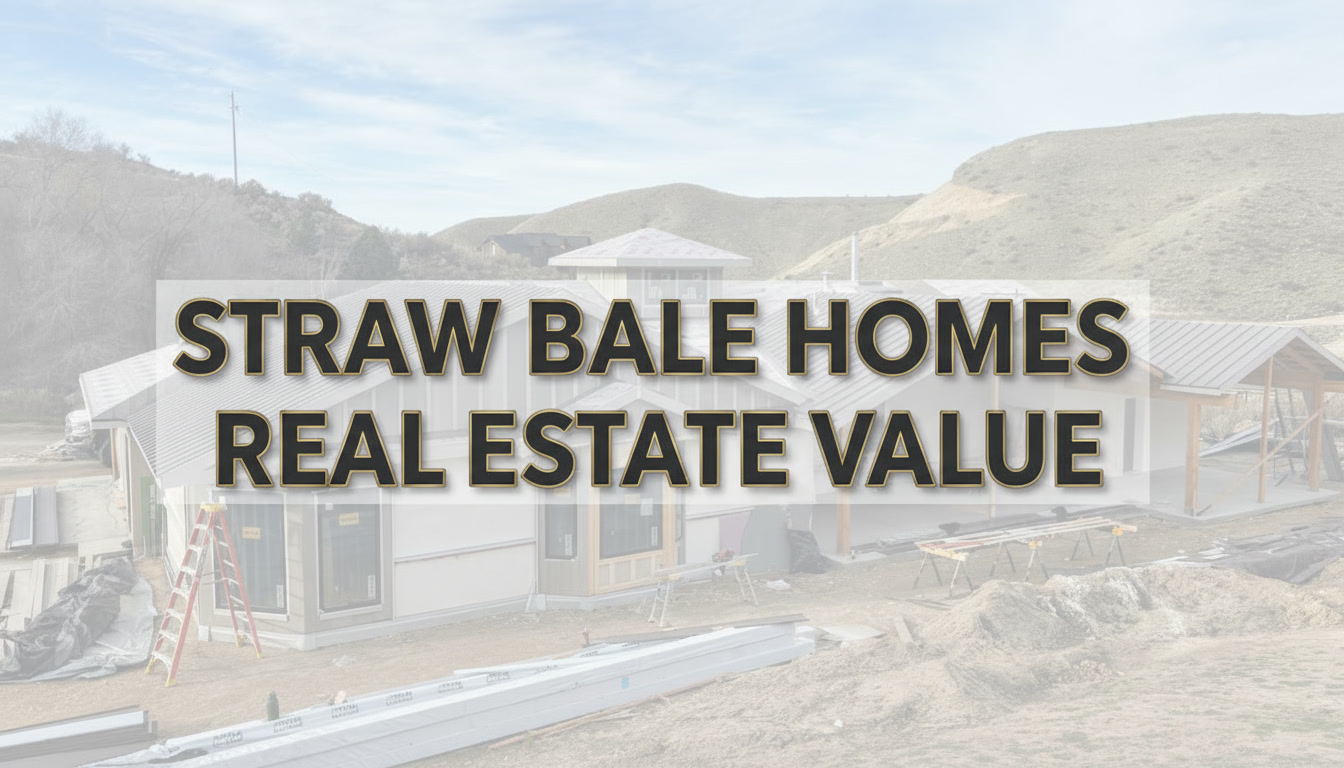
Our Squaw Butte project is a 2,850 square foot, net-zero straw bale home built in Emmett. If it came on the market today, the estimated resale value would be at or above construction cost, despite being several years old.
That's not speculation. That's based on comparable sales in Boise Valley foothills properties with similar square footage, construction quality, and performance specifications.
Buyers see: R-45 walls, zero HVAC usage during winter months, passive solar design, natural materials, and documented utility costs. They understand the value. They pay for it.
The Comparison to Conventional Custom Homes
A conventional $1.5M custom home in Idaho typically appraises at 85 to 90 percent of construction cost in year five. A straw bale home at the same price point appraises at 95 to 100 percent. That's a measurable resale value advantage.
Over a 10-year ownership period, that difference compounds. The conventional home may depreciate to 75 to 80 percent of construction cost. The straw bale home holds at 95 to 100 percent or appreciates above.
For a $1.5M investment, that's a $225,000 to $300,000 difference in resale value. That's not theoretical. That's real market data from Idaho's Boise Valley.
If You're Building a Custom Home in Idaho to Last
You're probably not building it to sell quickly. You're building it as a multi-generational home. But if circumstances change and you need to sell, the straw bale advantage works in your favor.
You get a home that serves your family exceptionally well while you own it, with resale value that holds or appreciates. That's the best of both worlds.
For a $1M+ custom home investment in Idaho, that's exactly what you want.
