Do Straw Bale Homes Attract Rodents and Pests? Separating Myth from Reality
Do Straw Bale Homes Attract Rodents and Pests? Separating Myth from Reality
It comes up at almost every dinner party where someone mentions building with straw. A wall made of straw must be a hotel for mice, right? Bugs, rodents, all of it living in your walls. It is one of the most persistent myths about straw bale construction, and it falls apart the moment you understand how the wall is actually built.
Start with what a pest is looking for. A rodent or an insect wants two things in a wall: a void to live in and something to eat. A conventional wood-framed wall hands them both. Behind the drywall of a standard home is a hollow stud cavity, an open, hidden space that is close to perfect for a mouse to nest in. Run a few wires and pipes through it and you have given them highways too. The myth gets the truth exactly backwards. The hollow wall is the one with the rodent problem, and that is the wall most people live in without a second thought.
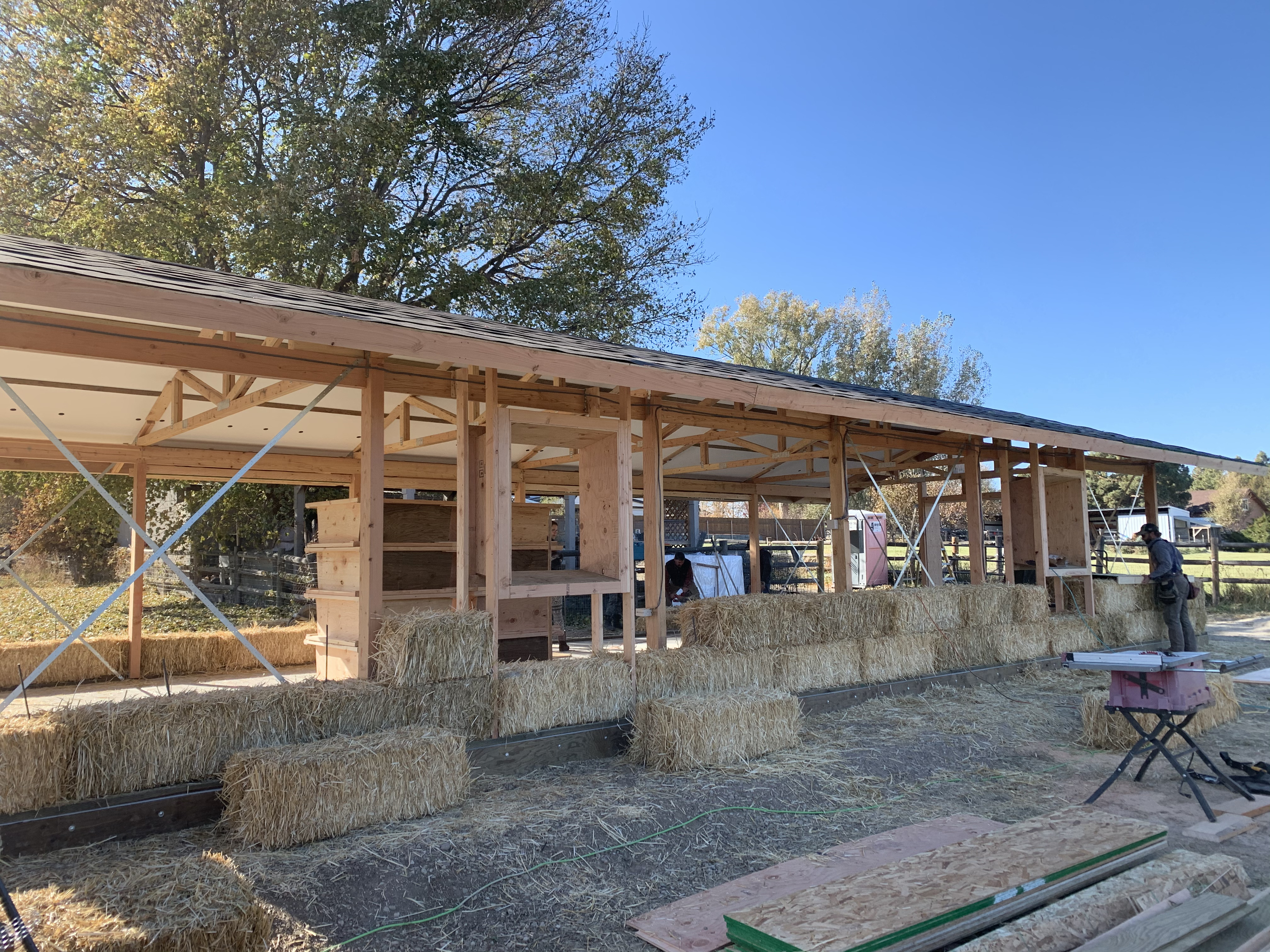
A straw bale wall has no void. The bales are compressed tight and stacked solid, then sealed on both sides under an inch or more of lime or earthen plaster. There is no open cavity to move into and no gap to slip through. A mouse cannot tunnel through cured plaster, and behind that plaster there is no empty space to tunnel toward. The wall is essentially one solid, dense mass from inside face to outside face. That is the opposite of an inviting home for a pest.
Then there is the food question, and this is where people make their biggest wrong assumption. They picture a field of grain. But the straw in a wall is not grain and it is not hay. Straw is the dry, hollow stalk left over after the wheat or other crop has been harvested. The seed, the part anything would want to eat, is long gone. It is essentially cellulose, the same material as paper or cardboard, with no nutritional value to a rodent. There is nothing in a straw bale wall worth eating, which means there is no reason for a pest to want in.
Now add the detailing. The same care that keeps water out of a straw bale wall keeps pests out too. Bales are raised off the foundation on a clean moisture break, every penetration is sealed, and the plaster wraps the structure completely. A well-built straw bale home is more thoroughly sealed against intrusion than a typical conventional build, not less.
We have built and visited straw bale homes across the Boise Valley and beyond, and the pest problems people imagine simply do not show up in practice. The straw bale homes built in Nebraska in the 1890s are still standing and occupied today, more than a century later. If straw walls were the rodent magnets the myth claims, those homes would have been eaten out from the inside generations ago. They were not, because there was never anything in the wall for a pest to want.
It is worth being honest about where care still matters, because it always does. Like any home, a straw bale house needs to be built properly and maintained. Gaps around utility penetrations, a poorly detailed roofline, or damage left unrepaired can create an opening in any wall system, straw bale or conventional. The difference is that a straw bale wall, done right, gives pests fewer ways in and nothing to stay for. This is one more reason the builder matters as much as the material. A wall built by someone who understands the system is sealed, solid, and unappealing to anything looking for a home in your home.
So do straw bale homes attract rodents and pests? Built correctly, they are among the most pest-resistant walls you can put around your family. No hidden cavity to nest in, no food to draw anything in, and a solid plaster shield sealing it all. The myth describes a hollow conventional wall far more accurately than it describes straw bale. Once you see how the wall is built, the dinner-party warning is easy to set aside.
If pests are one of the concerns sitting between you and the home you actually want, it is a good question to ask, and an easy one to put to rest with a look at how we build and seal every wall.
