Why Straw Bale Walls Outperform Conventional Framing in Idaho's Seismic Zone
Why Straw Bale Walls Outperform Conventional Framing in Idaho's Seismic Zone
You live in the Boise Valley. Idaho has seismic activity. The 1983 Borah Peak earthquake registered 6.9 on the Richter scale. Smaller earthquakes happen regularly.
When you are designing a custom home in the foothills, seismic performance is not an afterthought. It is a core design consideration.
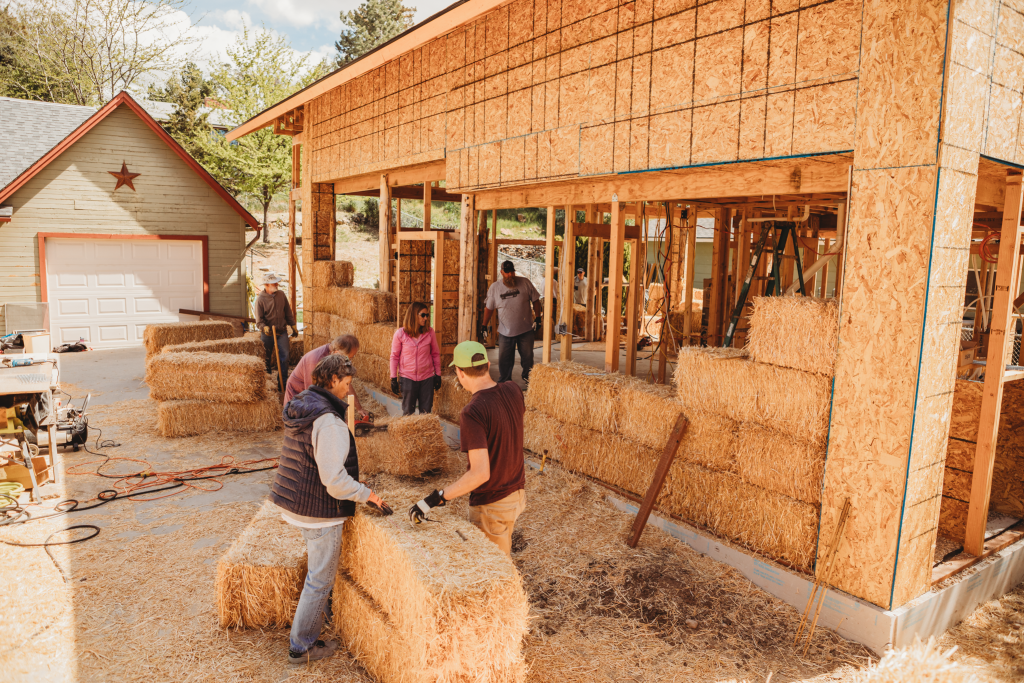
Here is what most people do not understand: A straw bale home in Idaho's seismic zone actually performs better than a conventional home. Not worse. Better.
How Earthquakes Stress Building Frames
An earthquake applies lateral force to a building. The ground shakes. The building wants to sway. If the building is rigid, it resists the sway and cracks. If the building is flexible, it absorbs the sway and survives.
A conventional wood-framed home is relatively rigid. The frame is fastened to the foundation with bolts. When an earthquake hits, the rigid frame does not want to move. The foundation moves. The frame resists. The connection points experience extreme stress. The bolts can shear. The frame can separate from the foundation.
How Straw Bale Walls Respond to Seismic Activity
A straw bale wall is fundamentally different. The compressed straw creates a flexible system. The wall is thick and heavy, but it is not rigid. When an earthquake hits, a straw bale wall moves with the shake. The compressed straw absorbs the lateral force. The wall flexes without breaking.
In seismic engineering, flexibility is survival. The structure that moves with the ground survives. The structure that resists the ground fails.
The Weight Factor in Idaho Seismic Design
A straw bale wall distributes weight evenly across the entire wall surface. A conventional wall concentrates weight at the studs. In an earthquake, concentrated loading at connection points creates stress concentrations. Bolts can fail. Distributed loading across the entire wall surface distributes seismic stress across the entire wall.
What Building Codes Say About Straw Bale in Idaho
Idaho building codes allow straw bale construction. The codes require proper foundation connection, adequate roof attachment, lateral bracing, and quality plaster finishes. These requirements are standard practice for any quality straw bale construction. The Boise Valley is in seismic zone 2. Building codes in zone 2 do not prohibit straw bale. They allow it.
Real-World Seismic Performance
Straw bale homes in Turkey experienced earthquakes and survived. Straw bale structures in California have weathered seismic events without significant damage. The pattern is consistent: straw bale homes survive earthquakes that damage conventional homes nearby.
The Design Implication for Your Idaho Home
When you build a straw bale home in the Boise Valley, you do not need to add expensive seismic bracing. You do not need special foundation bolting beyond standard practice. The straw bale wall system itself provides seismic performance. It is inherent to the design, not an add-on.
A conventional home in the same seismic zone requires special framing, reinforced connections, and additional bracing to achieve equivalent seismic performance. A straw bale home gets that performance naturally.
Building Smart in Idaho
You are building a home where your family will live for decades. An earthquake will happen at some point during those decades. A straw bale home protects your family better than a conventional home in a seismic event. The flexible system absorbs energy. The distributed load prevents sudden failures. The thick walls provide inertial mass that resists collapse.
