Why Straw Bale Homes Feel Different in Idaho Winter: Thermal Stability and What It Actually Means for Daily Life
Why Straw Bale Homes Feel Different in Idaho Winter: Thermal Stability and What It Actually Means for Daily Life
You wake up at 2 a.m. It is 15 degrees outside. In your conventional home in Idaho's foothills, you can feel the cold radiating from the bedroom walls. The temperature swings between 66 and 70 degrees all night. You pull the blankets tighter. Your wife is shivering. You get up and turn up the thermostat.
Your neighbor in a straw bale home wakes up at 2 a.m. The bedroom is exactly 68 degrees. The walls feel warm, not cold. No temperature swings. The furnace has not cycled once since bedtime.
This is not imagination. This is physics.
What Creates Thermal Comfort in Idaho's Climate
Thermal comfort is not just about temperature. It is about consistency. In a conventional Idaho home with R-20 walls, the indoor temperature is constantly chasing the outdoor conditions. The furnace cycles 20 times a night. Temperature swings between 66 and 70 degrees. You do not sleep well.
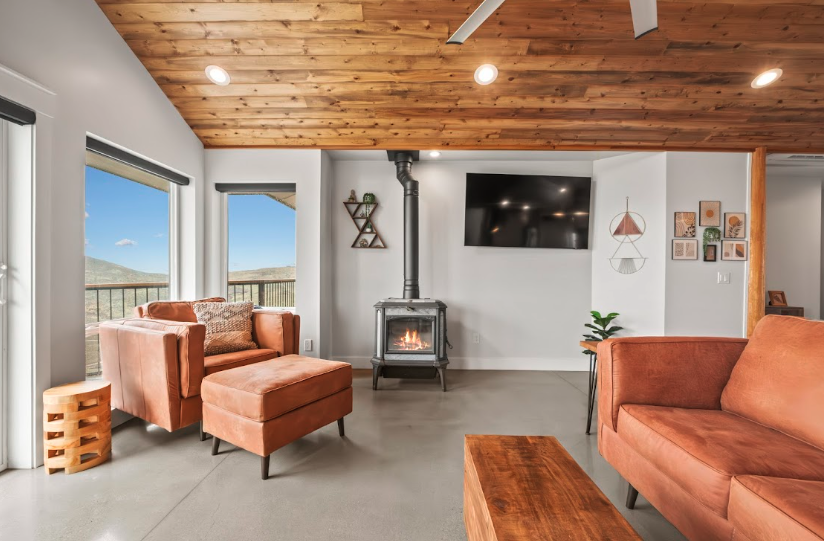
In a straw bale home with R-45 walls, the temperature stays at 68 degrees. The furnace cycles once or twice. The walls are warm because the R-45 insulation is preventing heat loss through the envelope. You do not feel temperature swings. You sleep.
This matters in Idaho because our winter temperature swings are dramatic. A 15-degree night followed by a 45-degree day creates massive thermal stress on a conventional home.
Thermal Mass and Temperature Stability in Idaho's High Desert
Straw bale is not just insulation. It is also thermal mass. The compressed straw absorbs heat during the day and releases it at night. This creates temperature stability that goes beyond what insulation alone provides.
Combined with passive solar design, thermal mass becomes a heating system perfectly suited to Idaho's high desert climate. South-facing windows capture winter sun. Idaho has 200-plus sunny days per year. That energy is absorbed by straw bale walls during the day. As the sun sets and the temperature drops, the walls release that stored heat. The furnace barely runs.
Why This Matters Beyond Comfort in Idaho
Sleep: Temperature stability allows deeper sleep in Idaho's variable climate. You are not being disturbed by micro-temperature swings.
Energy costs: A furnace that cycles 20 times a night uses more energy than a furnace that cycles 3 times a night. The R-45 walls and thermal mass mean the furnace runs less.
HVAC lifespan: Constant cycling shortens the lifespan of your furnace. A furnace in a straw bale home with minimal cycling might last 25 years versus 15 years in a conventional home. A furnace replacement costs significant money.
The Experience on Move-In Day
When clients move into a straw bale home in the Boise Valley for the first time, they notice the thermal comfort immediately. Not in a theoretical way. They feel it.
First-time visitor: Why is the air so warm. Why do the walls feel warm.
The walls are R-45 insulation. They are not cold. They are not radiating cold into the room like conventional exterior walls do in winter. They are maintaining the room temperature instead of pulling heat out of it.
Summer Comfort in Idaho's High Desert
The thermal stability works in summer too, but in reverse. In a straw bale home with proper window overhangs designed for Idaho's latitude at 43.6 degrees north, the R-45 walls block heat. The roof overhangs shade the windows. The thermal mass stores heat during the hot day and releases it at night when Idaho temperatures drop. The AC runs less.
The Real Question for Your Idaho Home
Do you want to wake up at 2 a.m. in winter and feel cold radiating from the walls? Or do you want to wake up and the home is exactly the temperature you set it at. The walls are warm. Your sleep is not disrupted.
Idaho's Boise Valley has dramatic seasonal temperature swings. A straw bale home with R-45 walls and thermal mass buffers these extremes. Your family sleeps better. Your utility bills are lower. Your systems last longer.
