What a Finished Straw Bale Home Really Looks Like: A Walk Through Bitterbrush
What a Finished Straw Bale Home Really Looks Like: A Walk Through Bitterbrush
When most people hear "straw bale," they picture something rough. A barn. A cabin out on the back forty. Something you would build for the land, not something you would raise a family inside. Then they stand in front of one of our finished homes, and the picture in their head comes apart.
Bitterbrush is the latest example.
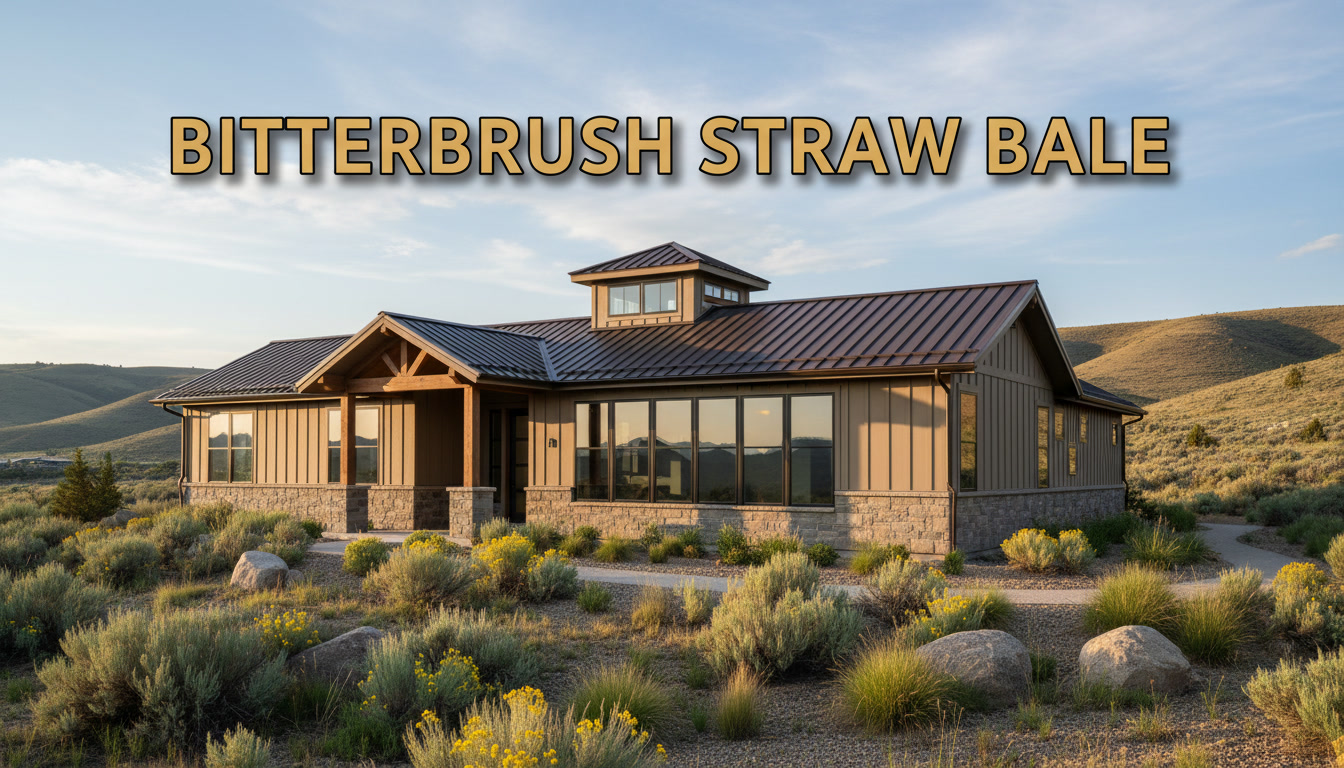
It sits in the foothills north of Boise, settled into the sage and bitterbrush it takes its name from. From the approach you see a low, grounded single-story home with a standing-seam metal roof, warm board-and-batten siding, and natural stone running along the base. A cupola rises at the center of the roofline, pulling daylight straight down into the heart of the house. Walls of glass open the main living space out to the hills. Nothing about it whispers "straw." Everything about it says built to last.
That is exactly the point.
The part you never see is the part that matters most
The thing that makes Bitterbrush perform is buried inside the walls, where no one will ever lay eyes on it. The exterior walls are built from densely packed straw bales, plastered inside and out. Once they are finished, they look and feel like any high-end home. What is different is what those walls do.
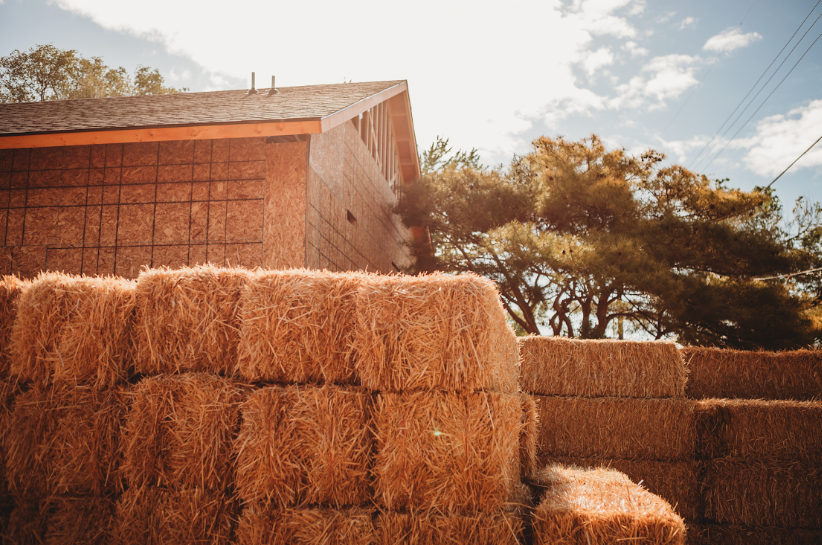
A straw bale wall like the ones at Bitterbrush carries an insulation value in the range of R-30 to R-45. A conventional stick-framed wall typically lands somewhere around R-13 to R-19. That gap is not a rounding error. It is the difference between a house that fights the climate every single day and a home that mostly ignores it. In practical terms, straw bale homes routinely run around 30 percent lower on heating and cooling than conventional construction, and the comfort inside is steadier from room to room and season to season.
There is a second thing those thick walls do that is harder to put a number on. They breathe. The assembly manages moisture and water vapor far better than a conventional wall, which is a big reason straw bale homes are considered some of the healthiest interiors you can live in. The air stays clean. The materials are natural and non-toxic. For families dealing with allergies or simply tired of living inside sealed boxes full of off-gassing materials, that matters.
"But isn't straw a fire risk?"
This is the first question almost everyone asks, and the answer surprises them every time.
A plastered straw bale wall is not loose, fluffy tinder. It is straw packed so tightly that there is not enough oxygen inside the bale to support a fire, then sealed under plaster. In ASTM E-119 testing, straw bale wall assemblies have held up to direct flame for more than two hours. That outperforms a lot of conventional assemblies. It is a real reason straw bale construction has gained ground in fire-prone regions, and it is one of the reasons we keep building this way in a landscape like ours.
We like proving this in person. When we hold a Learn and Burn, people get to watch a straw bale wall stand up to fire with their own eyes. It tends to end the debate.
Designed for the land, not dropped onto it
Bitterbrush did not start as a floor plan. It started as a piece of ground in the foothills, and the design grew out of that ground.
The orientation, the window placement, the deep roof overhangs, the way the living space reaches toward the view: none of that is decoration. It is passive solar design doing quiet work, letting the home capture warmth when it wants it and shade itself when it does not. The result is a house that works with the climate of the Boise Valley instead of against it, and one that looks like it belongs exactly where it sits.
That is the part I care about most. I take a raw piece of land and I make it into exactly what the people who will live there want, and I make it fit the place. A home is an environment where a family lives, has experiences, and grows up. Getting it right is somewhat sacred work, and it is personal to us. Bitterbrush is built to serve the people in it for the rest of their lives, and to keep serving long after that. A well-built straw bale home has a lifespan measured in a hundred years and more.
Built green, all the way down
There is one more thing worth saying about a home like this, because it rarely gets credit.
The straw in these walls is wheat straw, a byproduct of a crop that regenerates every single year and is grown right here in the region. Instead of being burned off as waste, it gets locked into a wall where it keeps storing the carbon it pulled out of the air while it grew. Straw bale stores more carbon than just about any other natural insulation. So the same wall that makes Bitterbrush quiet, comfortable, and efficient is also doing the planet a favor. That is what we mean when we say green building should make plain common sense, not require a sacrifice.
Come see one for yourself
A blog post can tell you straw bale is refined, high-performing, and beautiful. Standing inside one tells you in about four seconds.
That is why we open our newly finished homes for private, invitation-only showings to people who are seriously considering building this way. There is no substitute for walking the rooms, feeling how steady the temperature is, and seeing how far this kind of home is from the rough picture most people start with.
If you have been thinking about a custom straw bale or high-performance home in the Boise Valley, reach out. We would be glad to talk through your land, your vision, and whether one of these showings is the right next step for you. Bitterbrush is what happens when raw ground, the right materials, and a build done right come together. Yours could be next.
