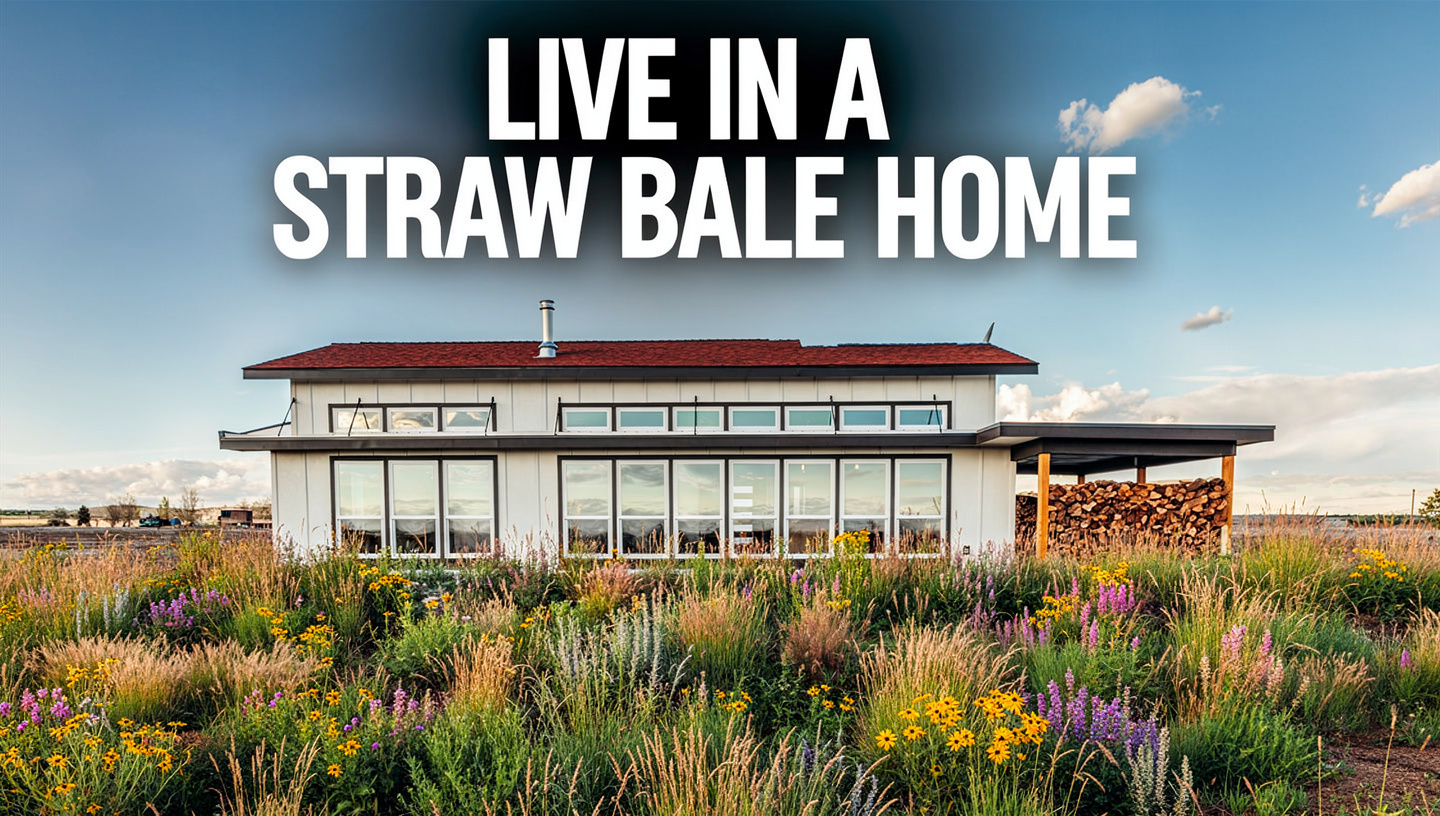
What It's Actually Like to Live in a Straw Bale Home: The Daily Reality
What It's Actually Like to Live in a Straw Bale Home: The Daily Reality
You've read the statistics. R-45 walls. 30 to 90 percent lower utility costs. Superior air quality. But what does it actually feel like to wake up every morning in a straw bale home? What's different about living in a space built this way?
Let me walk you through the real experience of living in a straw bale home in the Boise Valley, day to day.
The First Thing You Notice: The Air
You walk in for the first time. Before you see anything else, you feel it. The air is different. Cleaner. Lighter. It doesn't have the chemical smell of new construction. No off-gassing. No spray foam odor. No paint fumes lingering in the corners.
First-time visitors comment on it immediately: "The air feels different in here." They can't quite explain it, but they feel it in their lungs. That's the absence of VOCs. That's natural materials off-gassing nothing. That's the reality of living in a space where the walls breathe.
If you have asthma, allergies, or chemical sensitivity, this difference is profound. Some families discover for the first time in years that they can breathe freely indoors. No inhalers. No reactions. Just clean air.
The Second Thing: The Silence
Eighteen-inch straw bale walls create sound attenuation that conventional framing can't match. Outside noise simply doesn't penetrate. A neighbor's lawnmower. A truck on the highway. The wind. It's all muffled. The home is quiet.
That quiet becomes something you notice immediately when you step outside. The world is loud. You come back inside and there's silence. Not the silence of a sealed, deadened space, but the silence of a naturally sound-insulated structure.
For families who value peace and quiet, this is one of the most underestimated benefits of straw bale living. You're not just building a high-performance home. You're building a refuge from outside noise.
The Third Thing: Temperature Stability
You wake up in the morning. The temperature inside is the same as when you went to bed. You didn't hear the furnace kick on at 3 AM. You didn't wake up cold. The home maintained a stable, comfortable temperature throughout the night with no mechanical intervention.
That's the thermal mass at work. That's R-45 walls holding heat. That's passive solar from the day before still releasing energy. This happens every single night in a straw bale home during heating season.
In summer, the same principle works in reverse. The home stays cool during the day. The thick walls delay heat from penetrating. When night comes, the absorbed heat radiates back outside. You don't have your air conditioning running constantly. You have a naturally stable temperature.
That stability is comfort. But it's also financial. Your mechanical systems barely run. Because your home naturally maintains temperature, your HVAC operates as backup, not primary.
The Fourth Thing: The Tangible Quality
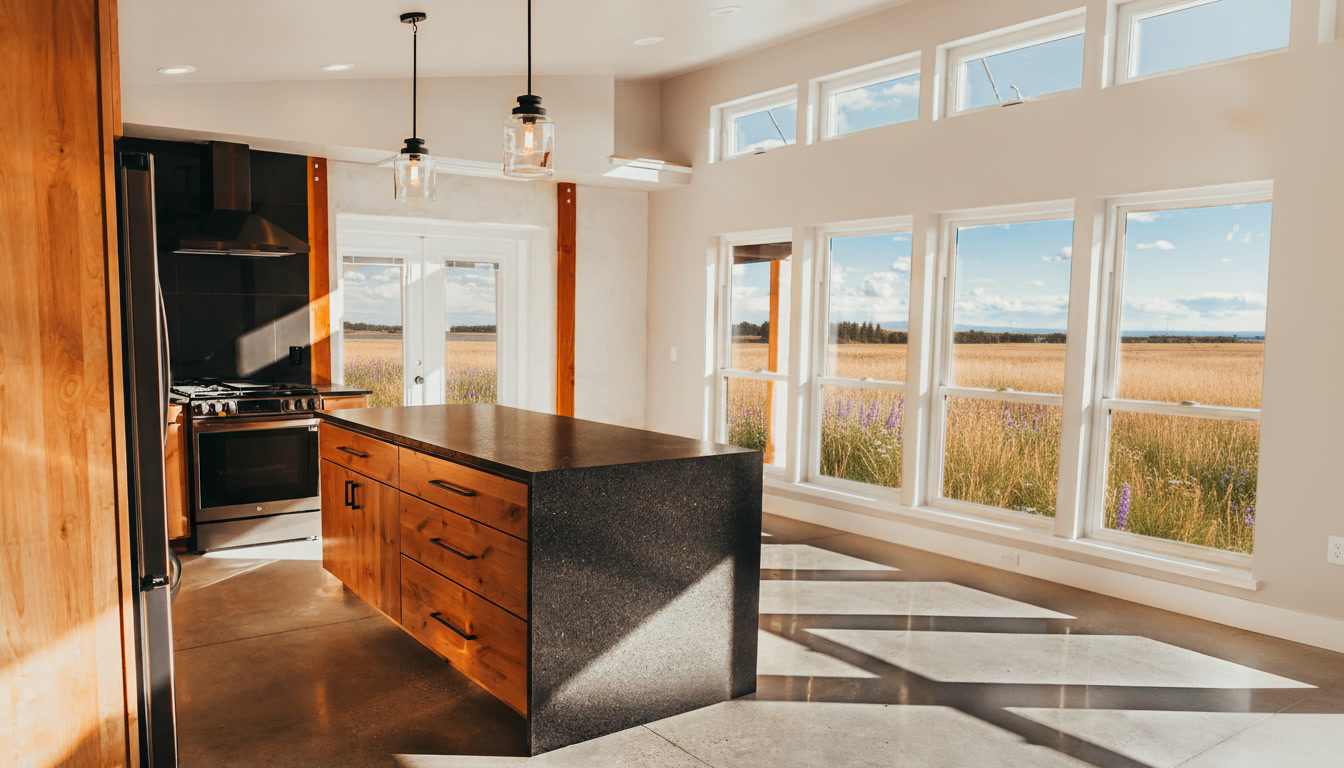
You notice it in the details. The weight of the door. It's solid. It doesn't rattle or squeak. The silence between rooms is profound. The way natural light moves through the space feels different because the plaster walls diffuse it naturally. The interior finishes—natural wood, lime plaster, non-toxic stains—have a quality that conventional finishes don't.
These aren't luxury details. They're the result of choosing natural materials over engineered products. They're the result of caring about how a home actually feels when you live in it.
Living With Lower Utility Costs
Your monthly utility bill arrives. It's $45. Not $45 plus water. Forty-five dollars for heating, cooling, and electricity combined. You read it twice. It's accurate. Your neighbor's conventional home costs $200 a month. Yours costs $45.
That's not just a number. That's $155 a month you don't have to spend. That's $1,860 a year. That's freedom to allocate that money to something that matters to your family.
Over decades of ownership, that adds up to significant wealth preservation. You're not constantly paying for heating and cooling. You're living in a home that performs for you.
Living in a Home Built to Last
You understand, after living there for a few years, that this home will serve your family for generations. The straw bale walls won't deteriorate. The lime plaster breathes with the seasons. The passive solar design just keeps working. Your HVAC system is simple and reliable.
You're not worried about the home needing major renovation in 20 years. You're not wondering if you'll have to replace the walls or the insulation. You built a home that will outlast you. That creates a different kind of peace than owning a conventional home that will need significant work in a decade or two.
The Emotional Reality
After a year of living in a straw bale home, most people report the same thing: "I had no idea this is what we were getting."
They knew, intellectually, that the home would perform well. But experiencing it—breathing the clean air, living with the silence, waking up warm without furnace noise, paying utility bills that are shocking in their affordability—that's different than knowing it on paper.
It's the difference between understanding that something works and actually feeling it work every single day.
For families building a custom home in Idaho, that's what straw bale living is really about. It's not about being eco-conscious or trendy. It's about creating a home environment that supports your family's health, comfort, and financial wellbeing every single day.
